Ducting and extraction
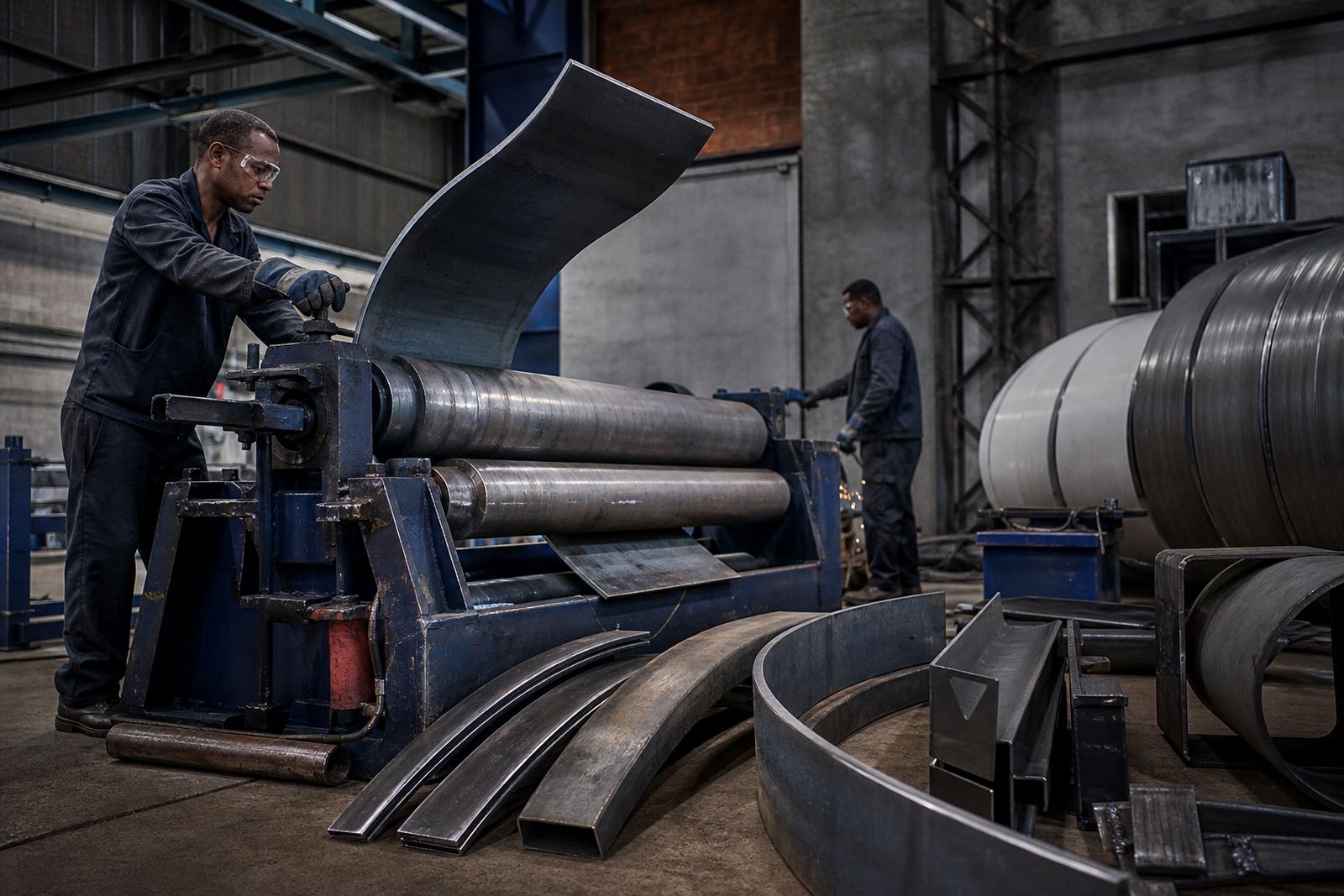
Brockett rolls steel parts for ducting and extraction work, from round sections and bend segments to transitions and covers. Fabricators send drawings, templates or sketches with material details for quoting.
Rolled parts for ducting work
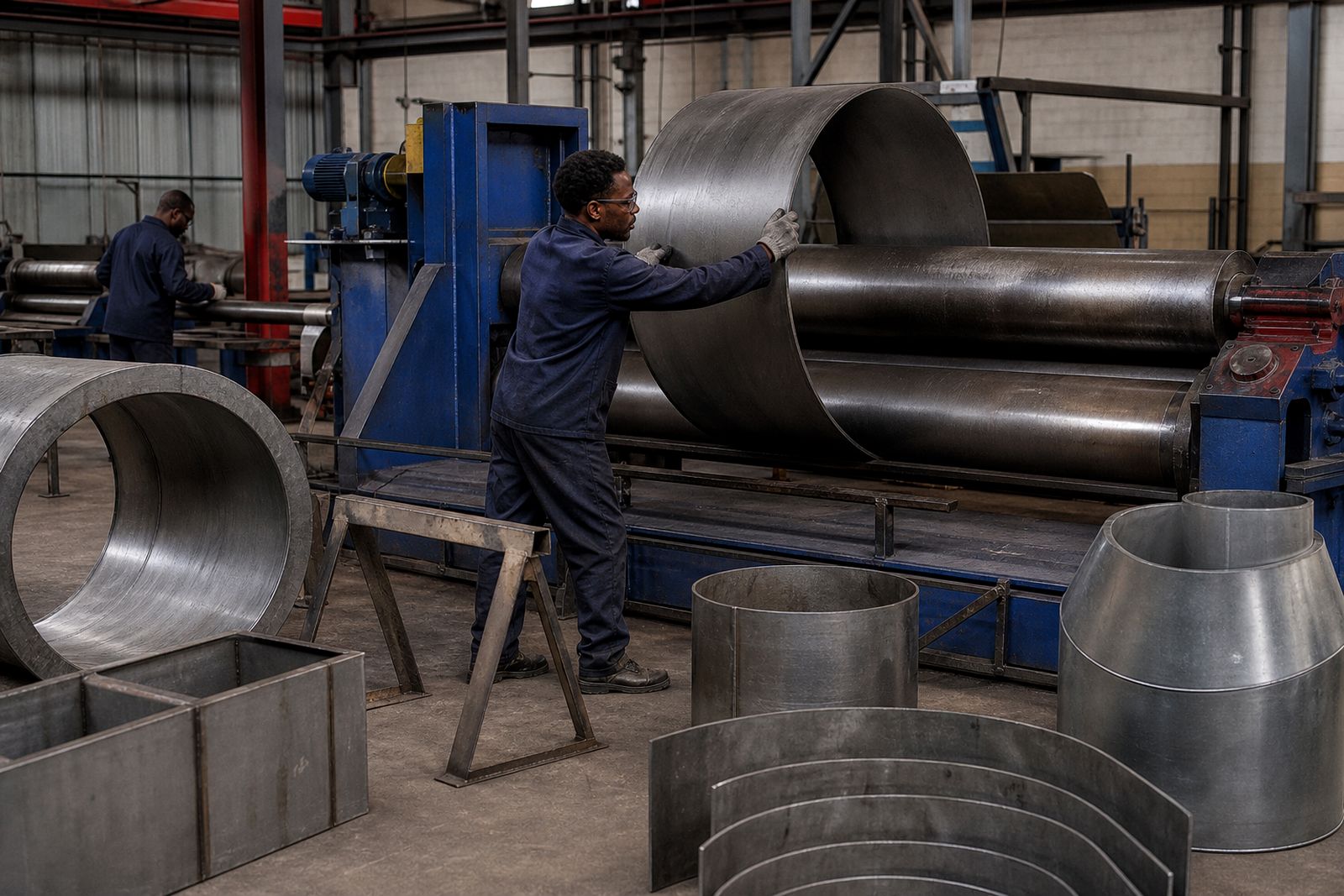
Brockett supplies rolled steel components for ducting and extraction fabricators who need parts formed accurately before assembly. Typical work includes round duct sections, rolled pieces for bends, transition parts and formed covers used in ventilation and extraction systems.
Because the workshop focuses on rolling, curving, shaping and forming, customers can send parts that need to start with the right curve or rolled profile for fabrication in their own workshop. This is useful where straight sheet or section must be formed first so that fitting, fastening and finishing can follow more easily.
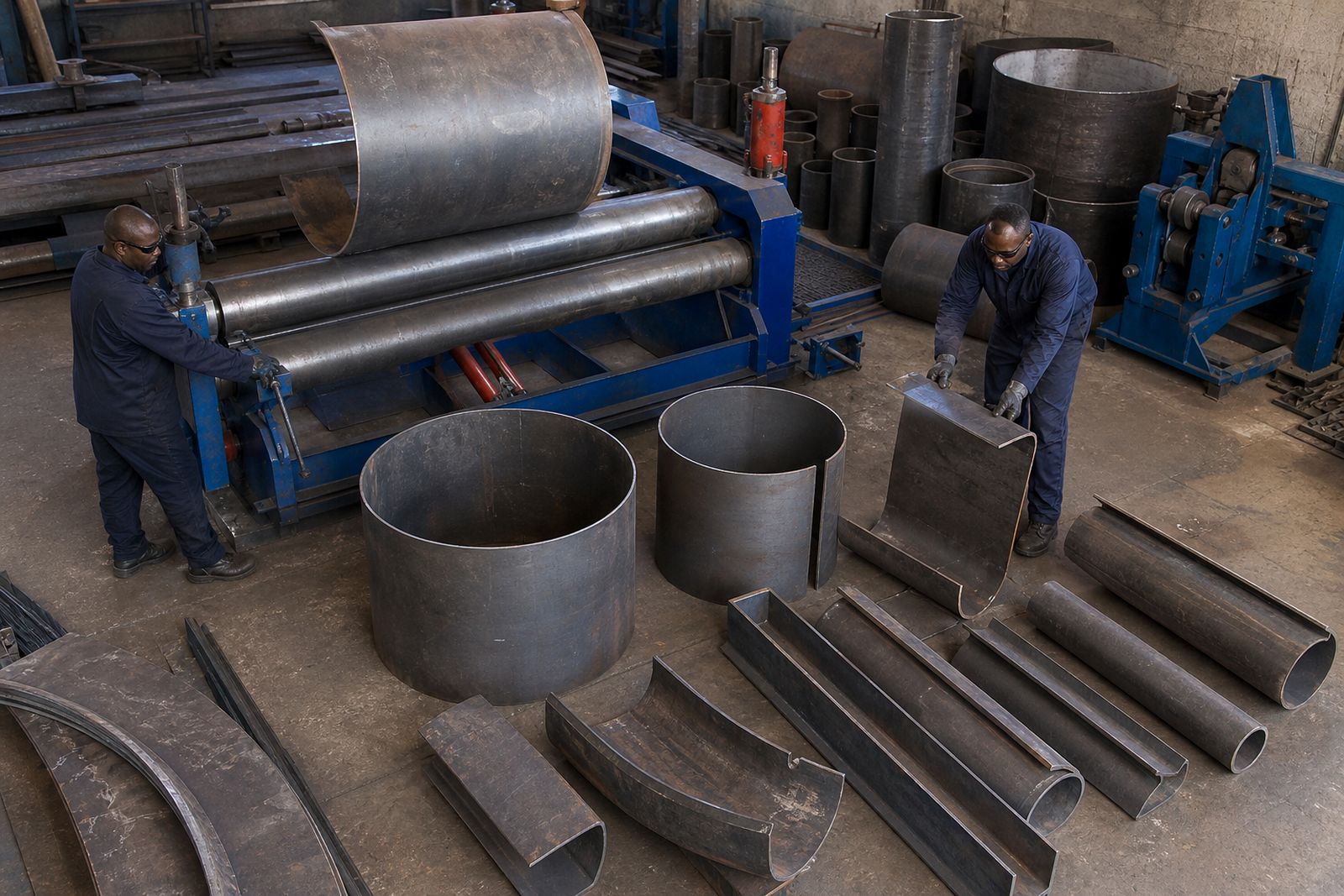
Round duct sections and bend segments
For straight round ducting, Brockett rolls sheet to the required diameter so fabricators can assemble duct sections to suit their own layouts. For directional changes, the workshop can form rolled segments that are used to build bends from multiple pieces.
Where a job calls for repeated sections, clear drawings or templates help keep the rolled shape consistent from piece to piece. If you are sending a sketch, include the diameter, width of each piece, material details and whether parts must match an existing run.
Common ducting related items include
- Round duct sections
- Rolled bend segments
- Curved covers and wrap pieces
- Transition components formed from steel sheet
Transitions, covers and formed sheet components
Extraction and ventilation fabrication often includes more than simple round tube sections. Reducers, offset pieces, covers and guarding can all depend on controlled rolling before they are joined into a finished assembly. Brockett works from customer supplied information to form these parts in its workshop in Sunnyrock, Germiston.
Some jobs need a gentle curve in thin sheet, while others need heavier material formed for wear covers or protective outer sections. If a part ties into existing ducting, a sample, template or marked up sketch can help show the intended shape. For related forming work, see sheet rolling and cone rolling.
Working from your drawings or samples
The clearest way to get an accurate quote is to send an enquiry through the contact form with drawings, templates or sketches and your material details. Brockett reviews the information, comes back with any questions needed to clarify the part, and then issues a written quote.
If you have an existing duct component that needs to be matched, include photos and key dimensions, or send a sample if practical. Information such as rolled diameter, developed width, material type, thickness and the number of pieces helps avoid back and forth and makes it easier to compare the rolled part to your fabrication requirement.
You can also read drawing a part for rolling, material and thickness and checking a rolled part before sending your enquiry.
Collection and transport
All rolling, curving and forming is done in Brockett’s own workshop at 2 Makro Place, Sunnyrock 1401, Germiston. Customers drop material off and collect finished parts, or arrange their own transport or courier.
For ducting work, it helps to think about how larger diameter sections, curved segments and lighter gauge sheet parts will be packed and moved after rolling. Marking parts clearly against your drawing references can also make sorting and assembly easier once they are back in your workshop.
If you need other rolled trade components as part of the same fabrication programme, see tanks and vessel shells, structural curves and repairs and replacement parts.
What our Steel Rolling customers say
Verified Google reviews
Questions we get asked
Can you roll round duct sections from our drawings?
Yes. Brockett works from customer supplied drawings, templates or sketches, together with material details. For round duct sections, include the required diameter, width of the section, material type and thickness, plus the quantity needed so the workshop can review the job and quote properly.
What details should we send for bend segments or elbows?
Send the segment layout you want fabricated, or a drawing that shows the required diameter, segment widths and any matching dimensions to existing ducting. If you have a sample or template, that also helps. Enquiries are handled through the contact form, followed by questions or a written quote.
Do you make transitions and covers for extraction systems?
Brockett rolls and forms steel components used in ducting and extraction fabrication, including transition parts and covers where rolling is part of the shaping process. The workshop forms the parts to the supplied information so your team can use them in further fabrication and assembly.
Can we send our own material for rolling?
Yes. Customers can drop material off at the workshop in Sunnyrock, Germiston, and collect the finished rolled parts afterwards. Customers can also arrange their own transport or courier. Include the material details with your enquiry so the quote matches what you intend to supply.
How do we get a quote for ducting components?
Use the contact form and send your drawings, templates or sketches with the material details. If anything is unclear, Brockett will reply with questions. Once the requirements are understood, the workshop issues a written quote for the rolled parts.
Also worth a look
Tell us about the part you need rolled
Send a note through our contact form with your drawing or sketch, the material and thickness, the sizes and quantities, and how the steel will reach our Sunnyrock workshop, and we will come back with questions or a written quote.
Open the contact form