Structural curves
Brockett rolls structural steel sections to the required curve for builders, steel fabricators and workshops making arches, canopies, trusses, stair stringers and feature work.
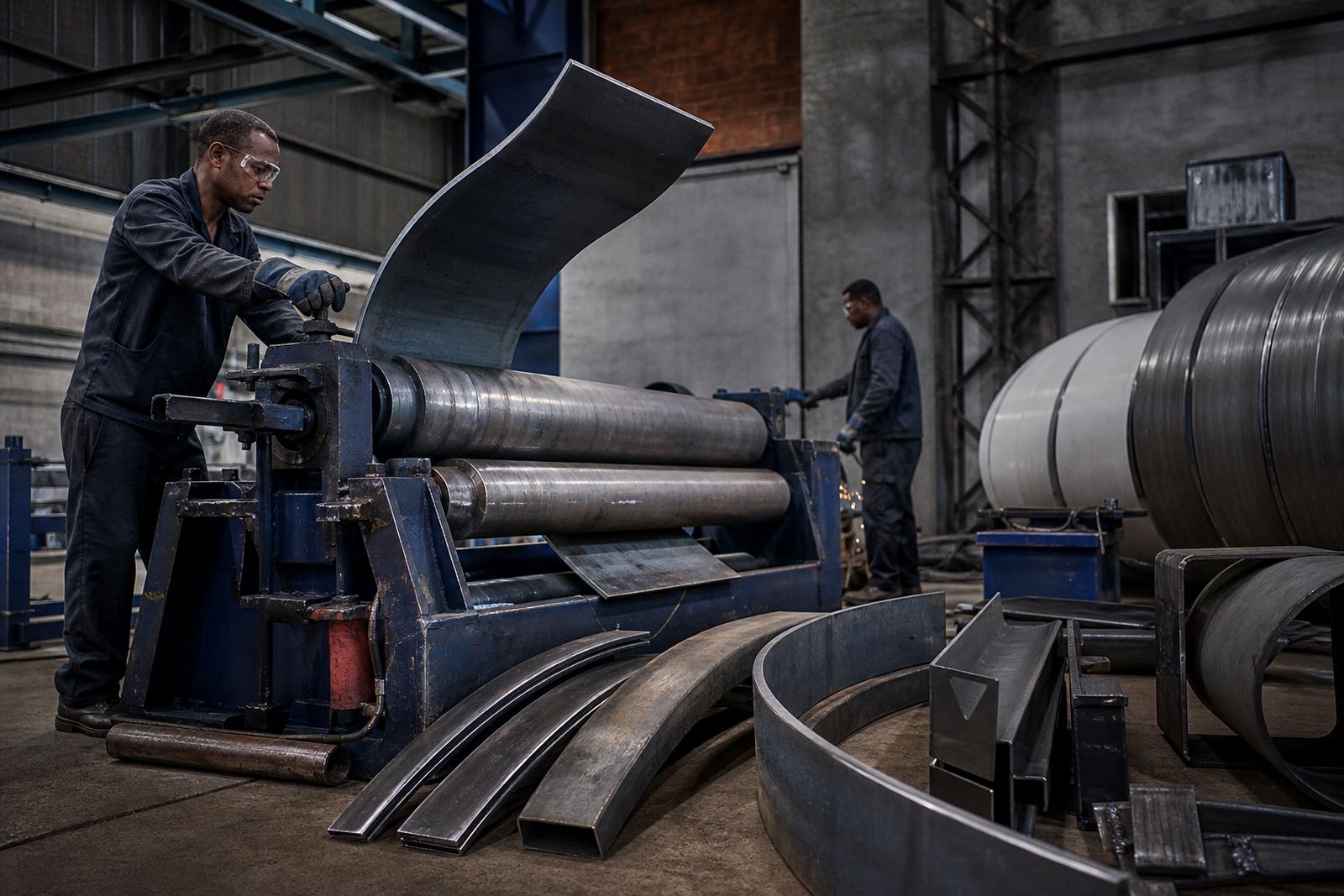
Rolled sections for structural steelwork
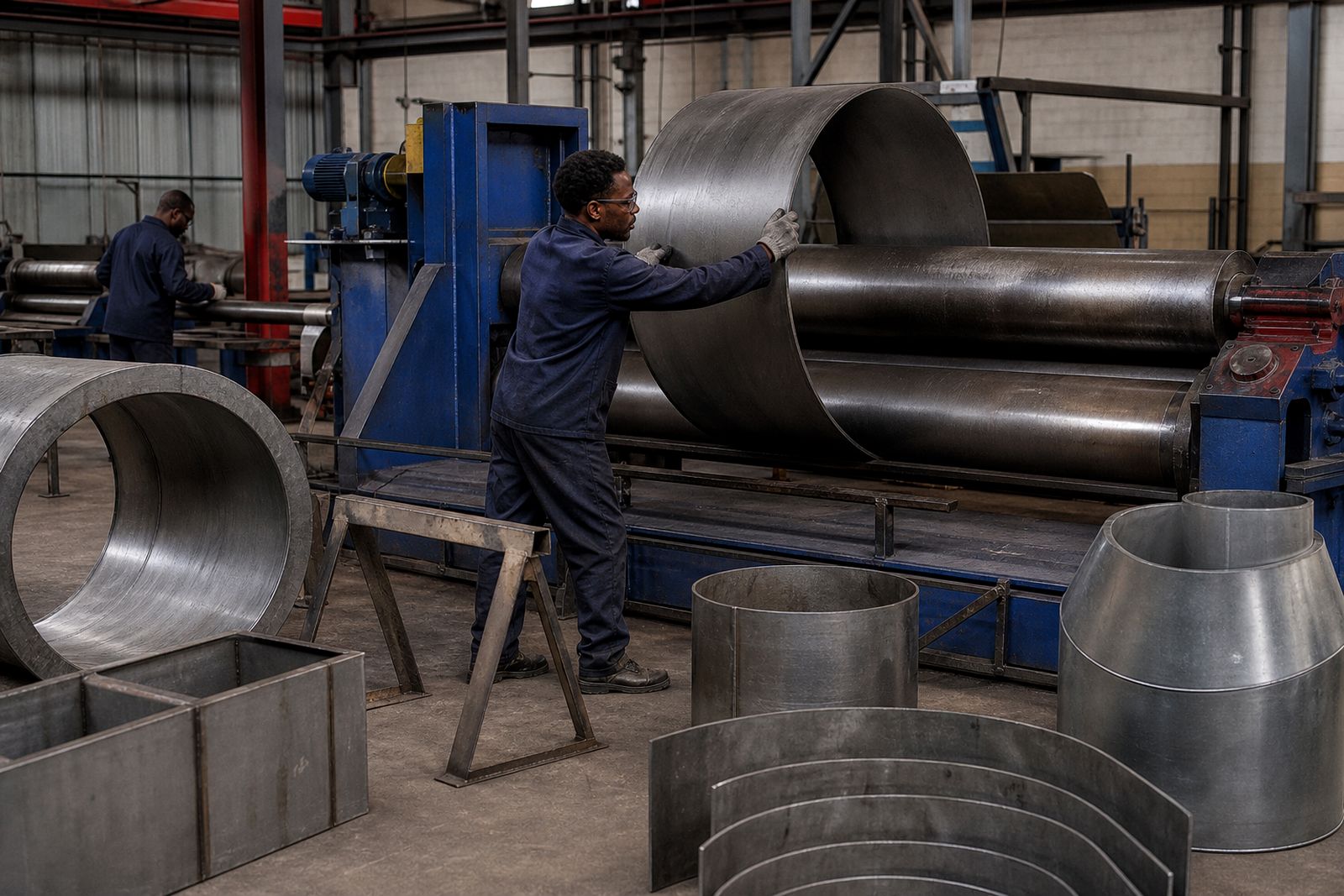
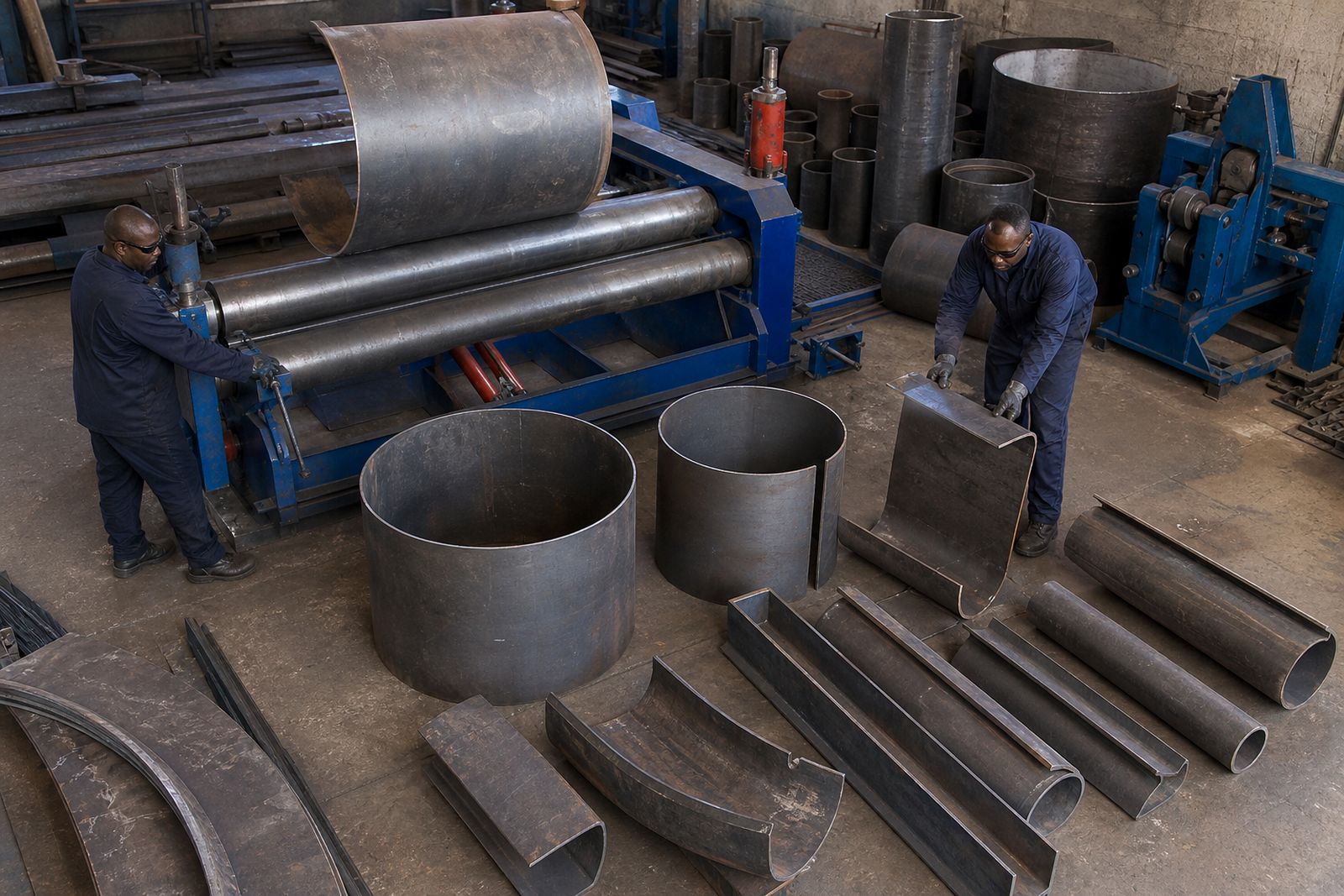
Structural curves are used where straight steel needs to follow a radius, sweep or arch. Brockett rolls sections such as beams, channels, tube, angle and flat bar to size for fabrication work that calls for consistent curved members.
These parts are commonly used in canopies, roof trusses, arches, stair stringers, entrance features and other formed structural details. Builders, steel fabricators and workshops send drawings, templates or samples, and the parts are rolled in Brockett’s workshop in Sunnyrock, Germiston.
Where curved members are often used
Curved sections help fabricators build steelwork that would be difficult to achieve with cut and welded segments alone. A rolled member gives a cleaner line for visible work and a repeatable shape where matching parts are needed.
- Arched roof members and canopy frames
- Curved beams and channels for openings and covered walkways
- Tube and angle rolled for balustrade frames and feature steelwork
- Stair stringers with a set curve for fabricated stair assemblies
- Matching curved sections for repeated structural details
For work that needs plate or sheet formed instead of sections, see plate rolling or sheet rolling.
Working from drawings and templates
Good information at enquiry stage makes structural rolling easier to quote and easier to check. Brockett works from customer supplied drawings, templates, sketches or samples, together with the material details. If anything needs clarification, the workshop replies with questions before issuing a written quote through the contact form.
For curved structural parts, it helps to show the section type, the required curve, quantities and whether parts must match an existing member or a template. If you are preparing information for enquiry, the notes on drawing a part for rolling and material and thickness are a useful starting point.
Practical considerations for fabricated curves
Different section shapes behave differently when rolled. A tube, channel or beam each has its own profile, so the drawing should make clear which face, leg or web relates to the curve you need. This is especially important for parts that will pair up, mirror each other or sit within a larger fabricated frame.
Where a curved member must suit existing steelwork, a template or sample can be useful alongside the drawing. Finished parts can then be checked against the required shape before collection. Guidance on inspection is available in checking a rolled part.
Customers supply the material and either drop it off and collect the finished parts, or arrange their own transport or courier. All rolling and forming is carried out in Brockett’s own workshop at 2 Makro Place, Sunnyrock 1401, Germiston.
Enquiries for arches, trusses and feature steel
Brockett handles structural rolling enquiries for trade customers who need sections curved to suit fabrication and repair work. Whether the job is a single replacement member or a batch of matching parts for a new build, the enquiry starts with the details needed to identify the required shape and material.
Send your drawings, templates or sketches and material details through the contact form. Brockett will review the information and come back with any questions or a written quote. You can also explore more about applications, including repairs and replacement parts.
What our Steel Rolling customers say
Verified Google reviews
Questions we get asked
What information should I send for a curved beam or channel enquiry?
Send the section type, the required curve, quantity, and the material details through the contact form. A drawing is best, but a clear sketch, template or sample can also help. If the part must match existing steelwork, include that detail so the shape can be checked properly.
Can Brockett roll tube, angle and flat bar for canopy or feature steelwork?
Yes. Brockett rolls sections including tube, angle and flat bar, as well as channel and beams, to the required curve for fabrication work. If you are unsure how to describe the part, send a sketch or template with the section and material details through the contact form.
Do I need to supply the steel for structural curves?
Yes. Customers supply their own material for work rolled in Brockett’s workshop. Material can be dropped off and the finished parts collected later, or you can arrange your own transport or courier for delivery and collection.
Can you work from a template if I do not have a formal drawing?
Yes. A template, sample or clear sketch can be used for many structural curve enquiries, provided the section and material details are included. If anything is unclear, Brockett will come back with questions before sending a written quote.
Where do I send an enquiry for rolled structural sections?
Use the contact form and attach your drawing, template or sketch with the material details. Brockett reviews the information in the workshop and replies with any questions needed to prepare a written quote.
Also worth a look
Tell us about the part you need rolled
Send a note through our contact form with your drawing or sketch, the material and thickness, the sizes and quantities, and how the steel will reach our Sunnyrock workshop, and we will come back with questions or a written quote.
Open the contact form