Section rolling
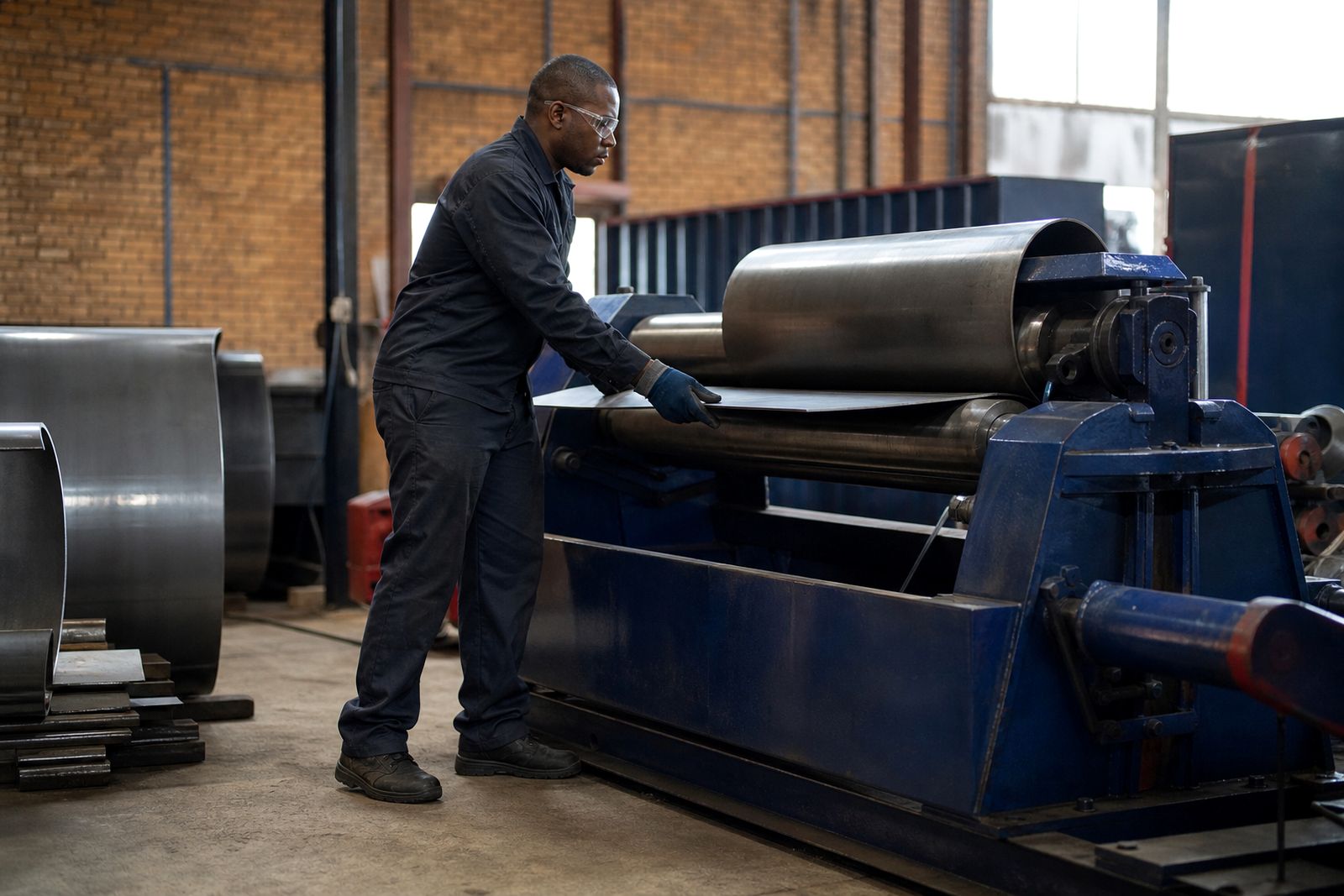
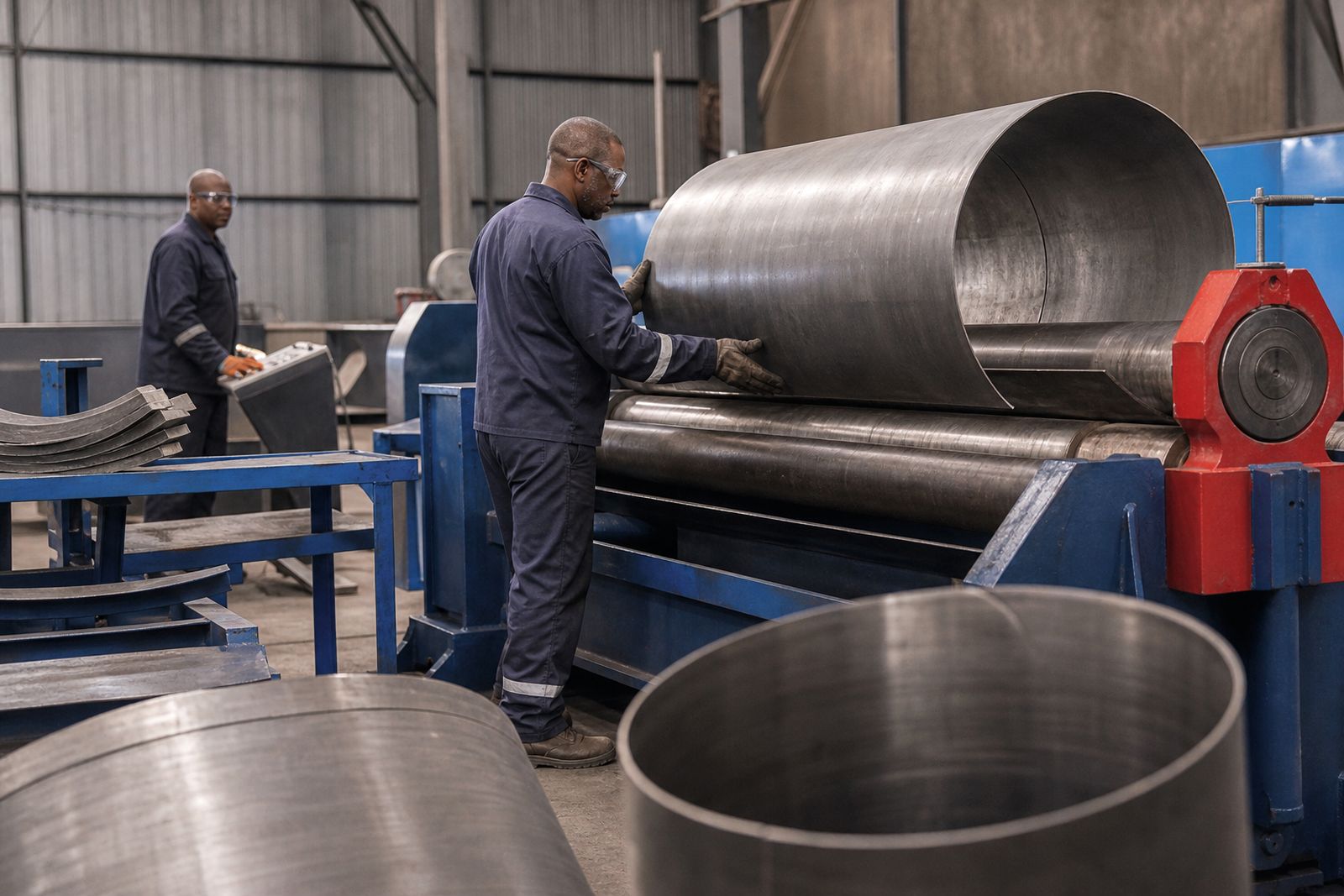
Brockett rolls steel sections to size for fabricators, builders and manufacturers who need clean curves for frames, rings, handrails and structural parts.
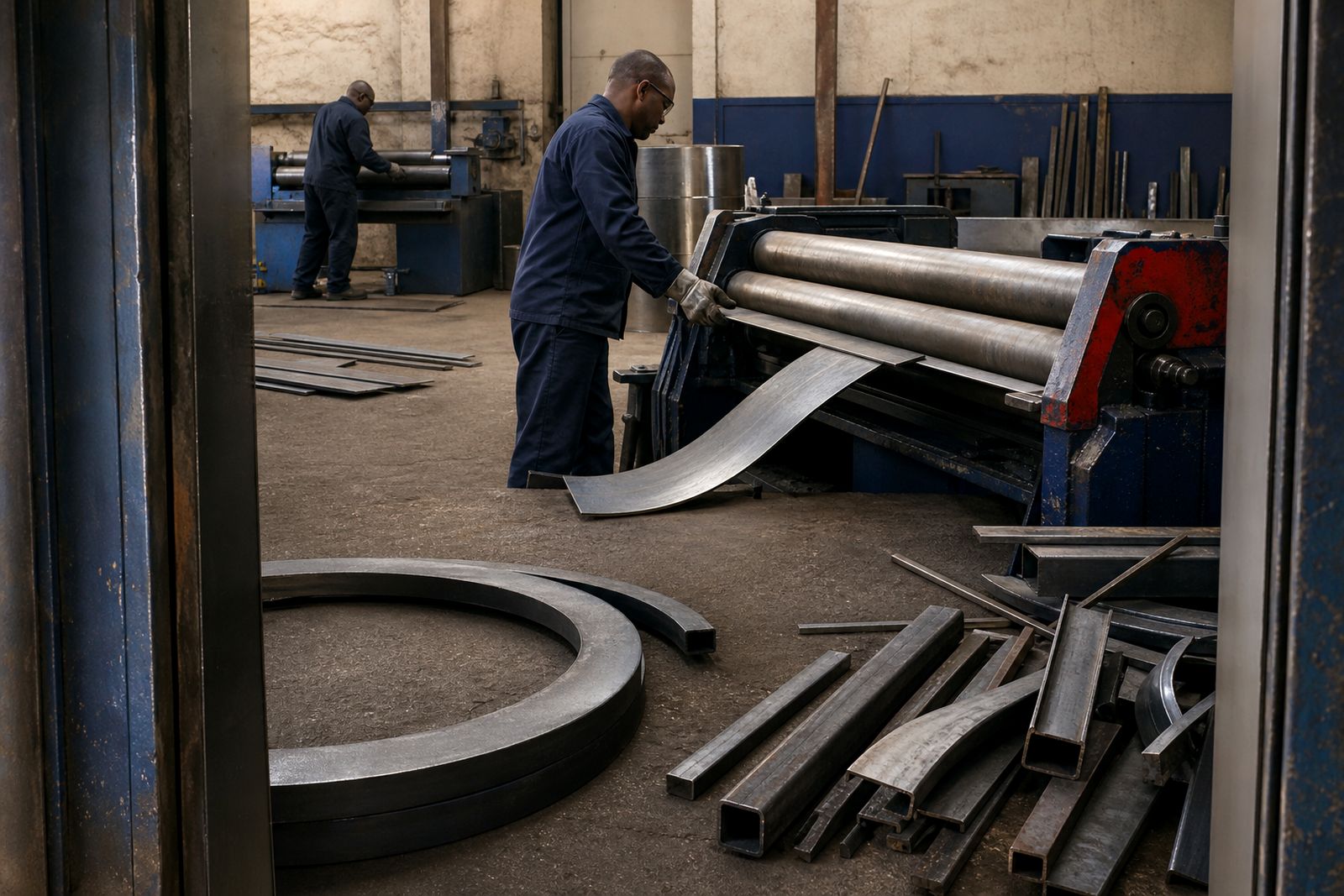
Rolled sections for curved steel work
Section rolling is used when straight steel needs to follow a set radius or form a full ring. Brockett rolls common sections such as angle, flat bar, channel, square tube, round tube and beams for fabrication and repair work. The aim is a usable curve that suits the part being made, whether it is a handrail, frame, stiffener, support ring or structural member.
Customers typically send work for parts that must match other fabricated components, bolt patterns, cladding lines or existing steelwork. Some jobs need a gentle sweep, others need a tighter arc or a complete circle. Brockett rolls these parts in its own workshop in Sunnyrock, Germiston, from customer drawings, templates or samples.
Section types and rolling orientation
Different profiles behave differently when they are curved. Angle can be rolled leg-in or leg-out, depending on how the finished part must sit in the assembly. Flat bar may be required the easy way or hard way, depending on whether width or thickness is following the curve. Channel and beam sections also need the rolling direction made clear so the finished shape suits the fabrication.
Square and round tube are often used where a cleaner outline is needed for visible frames, guards and rail components. With hollow sections, the important point is not only the radius, but also how the profile must present once rolled. If orientation matters, include that in the enquiry so the part can be quoted correctly.
- Angle, rolled leg-in or leg-out
- Flat bar, rolled to arcs and rings
- Channel for curved frames and supports
- Square and round tube for rails and formed frames
- Beams for structural curves and shaped members
Controlling shape, twist and distortion
With section rolling, the finished part is about more than the radius alone. Customers also care about squareness, orientation and how much twist is present after rolling. Some profiles naturally want to move or distort as they are formed, especially when the shape is asymmetrical. That is why clear part information matters at the start.
If a section has a critical face, edge or leg that must remain in a certain position, note it on the drawing or sketch. If the part must match an existing ring or frame, a template or sample is helpful. Brockett works from those details to produce parts that are practical to fit into the customer’s fabrication, whether for structural curves, rail components or repair pieces.
What to send with your enquiry
The quickest way to start is through the contact form with the part details. For section rolling, include the section type, material details, required radius or diameter, whether the part is an arc or a full ring, and how many pieces are needed. If angle, channel or beam orientation matters, make that clear as well.
Drawings are useful, but a neat sketch, template or sample can also help. If the part must match existing steel, say so. For guidance on presenting the work, see drawing a part for rolling, material and thickness and checking a rolled part. Once the details are received, Brockett replies with questions or a written quote.
How section rolling work moves through the workshop
Brockett is a workshop-only rolling business. Material and parts are rolled, curved and formed in the Sunnyrock workshop from customer supplied information and material. Customers can drop material off and collect finished parts, or arrange their own transport or courier.
Section rolling is often part of larger fabrication work, alongside plate rolling, sheet rolling or cone and segment rolling, but the work here is focused on rolled profiles rather than flat product. If you need rings, curved members or formed steel sections for fabrication or repairs, send the details through the contact form for review and a written quote.
What our Steel Rolling customers say
Verified Google reviews
Questions we get asked
Can you roll angle iron leg-in and leg-out?
Yes. If your part uses angle, say whether it must be rolled leg-in or leg-out, and include the radius or diameter required. That orientation affects how the finished section sits in the fabrication, so it should be shown clearly on the drawing, sketch or template.
Do you roll complete rings as well as arcs?
Yes. Brockett rolls sections for partial arcs and full rings, depending on what your fabrication requires. When sending an enquiry, state whether you need a full circle or a segment, and include the section type, material details and the target diameter or radius.
What section types can I send for rolling?
Brockett rolls steel sections such as angle, flat bar, channel, square tube, round tube and beams to size. If the profile has a critical orientation, face or leg position, include that information with the enquiry so the part can be assessed and quoted correctly.
What should I send for a quote on section rolling?
Use the contact form and send your drawing, sketch, template or sample details, together with the section type, material details, required radius or diameter, whether it is an arc or ring, and the quantity. If the part must match an existing component, mention that as well.
How do I get material to and from the workshop?
Customers drop material off and collect finished parts from Brockett’s workshop and head office at 2 Makro Place, Sunnyrock 1401, Germiston. If preferred, you can also arrange your own transport or courier for delivery and collection.
Also worth a look
Tell us about the part you need rolled
Send a note through our contact form with your drawing or sketch, the material and thickness, the sizes and quantities, and how the steel will reach our Sunnyrock workshop, and we will come back with questions or a written quote.
Open the contact form