Plate rolling
Brockett rolls steel plate into cylinders, part cylinders and curved shells for fabrication and repair work. Work is done from your drawing, template or sample in the workshop in Sunnyrock, Germiston.
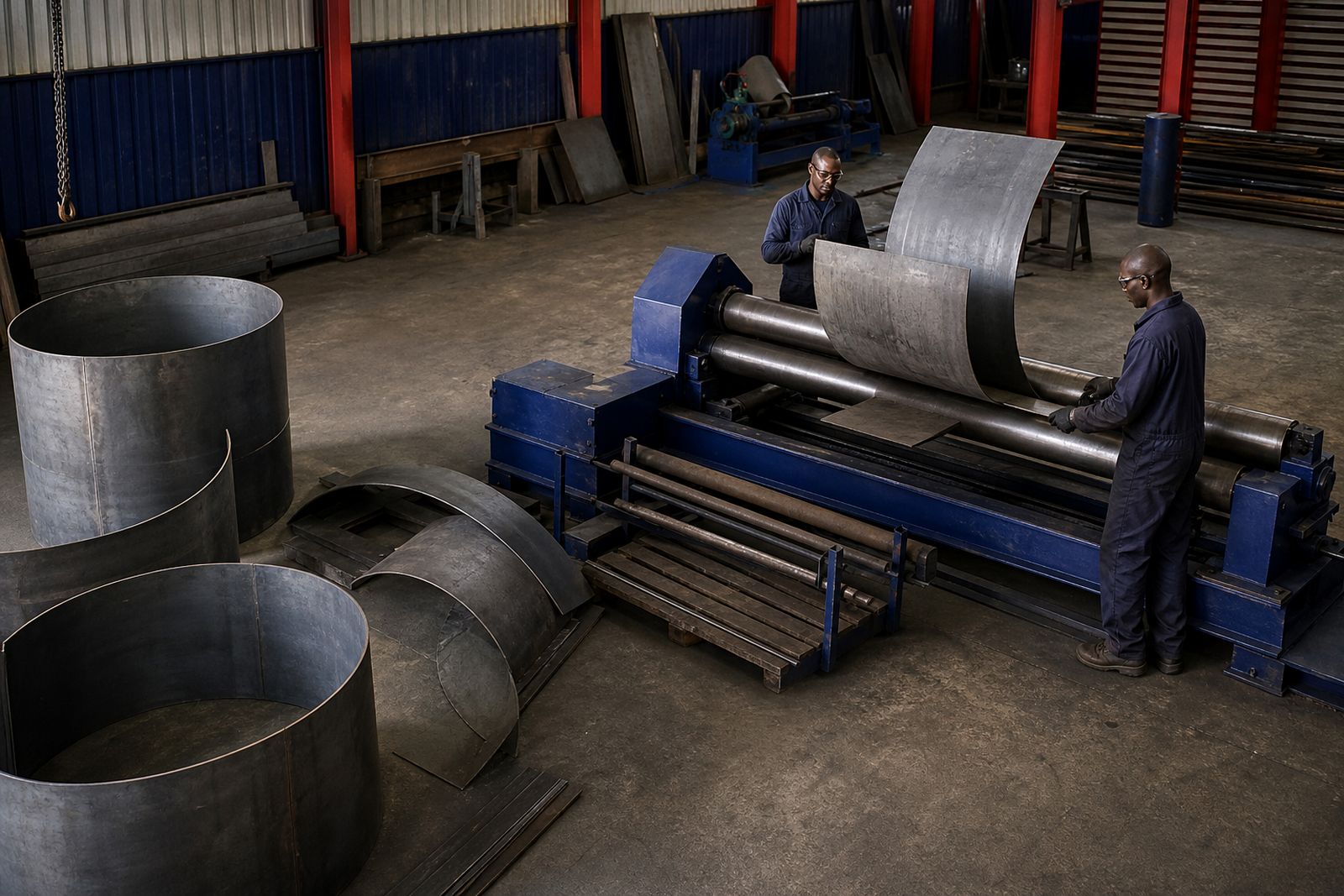
Plate rolled for fabrication work
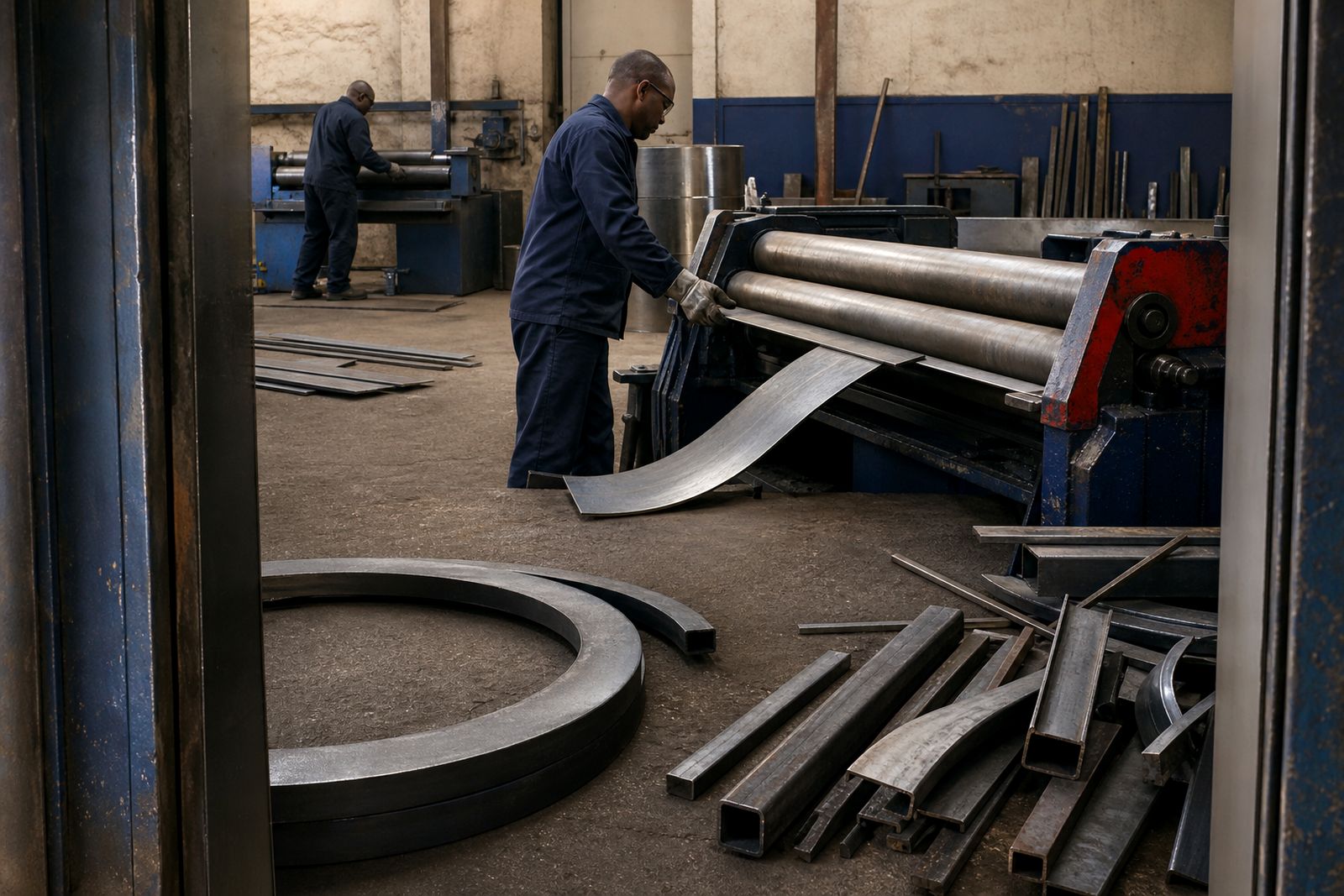
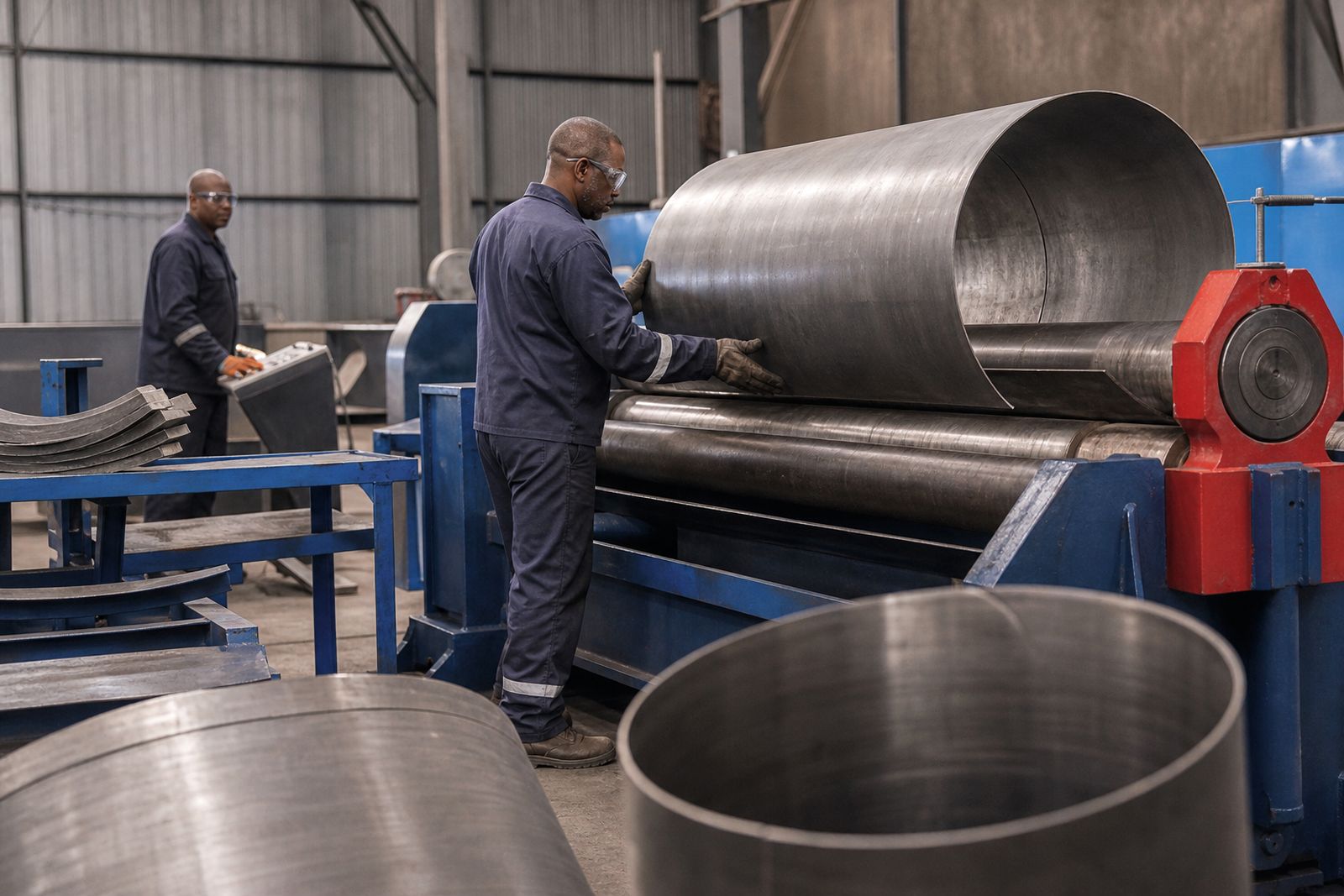
Plate rolling is used where the job calls for a heavier curved part that must hold its shape in fabrication. Brockett rolls steel plate into full cylinders, part cylinders and curved shells for builders, workshops, fabricators and manufacturers making or repairing trade equipment and steelwork.
Typical rolled parts include shell sections for tanks and vessels, curved pieces for hoppers, and formed plate for structural curves. Parts are rolled to the size supplied by the customer, so the finished curve suits the assembly you are building or repairing.
Full rolls, part rolls and shell sections
Not every job needs a complete cylinder. Some fabrications need a part roll that fits into a larger assembly, while others need a shell section that will be joined with matching parts later. Brockett handles these common plate rolling requirements in its own workshop, working from customer information supplied through the contact form.
For pricing and review, send a drawing, sketch, template or sample together with the material details. If anything needs clarification, Brockett replies with questions or a written quote. You can also read more about preparing information at drawing a part for rolling and material and thickness.
Pre-bending and controlling flat spots
A practical issue in plate rolling is the treatment of the ends. Where the job requires it, plate can be pre-bent to reduce straight sections at the leading and trailing edges. This helps when a cylinder needs to close up more cleanly, or when a shell section must match adjoining rolled parts more closely.
Flat spots also matter on heavier curved work. During rolling, attention is given to the shape so the finished part follows the required radius as closely as possible from end to end. That is especially important on tank sections, hopper bodies and repair pieces that need to line up properly during fabrication.
Checking the radius against your template
Plate rolling is not only about making the steel curve, it is also about checking that the curve matches what the job needs. Radius checks can be done against customer templates, samples or supplied dimensions, so the rolled part can be compared with the intended form before collection.
If you have a physical template, include it with the material or send the details first through the contact form. If you are working from drawings, clear radius information helps avoid rework. More guidance is available at checking a rolled part.
Sending plate in and collecting finished parts
Brockett rolls and forms parts in its workshop and head office at 2 Makro Place, Sunnyrock 1401, Germiston. Customers send an enquiry through the contact form with drawings, templates or sketches and the material details. Once the job details have been reviewed, Brockett replies with any questions or a written quote.
Customers then arrange the material and movement of parts in the way that suits their job.
- Drop material off at the workshop and collect the finished rolled parts.
- Arrange your own transport or courier for delivery and collection.
- Include any templates, samples or clear marking needed for the correct radius and orientation.
If your work also includes lighter curved material or rolled steel sections, see sheet rolling, section rolling and cone and segment rolling.
What our Steel Rolling customers say
Verified Google reviews
Questions we get asked
What information should I send for a plate rolling enquiry?
Send your drawing, sketch, template or sample through the contact form, together with the material details and the required rolled shape. If the part must match an existing radius, include that information clearly so Brockett can review the job and reply with questions or a written quote.
Can you roll a full cylinder as well as part cylinders?
Yes. Plate rolling jobs can include full cylinders, part cylinders and curved shell sections, depending on what your fabrication or repair requires. The important part is to send the required shape and material details so the job can be assessed correctly before quoting.
Do you check the radius of the rolled plate?
Yes, the rolled shape can be checked against customer templates, samples or supplied dimensions. Clear radius information helps avoid mismatch during fabrication, especially on tank sections, hopper bodies and other curved plate components that must line up with adjoining parts.
Can I send my own material for plate rolling?
Yes. Customers provide the material for work done in Brockett's workshop. You can drop material off and collect the finished parts yourself, or arrange your own transport or courier for delivery and collection once the rolling work is complete.
Where do I send my plate rolling enquiry?
Use the contact form and include your drawings, templates or sketches, plus the material details. Brockett reviews the information in the workshop and head office at 2 Makro Place, Sunnyrock 1401, Germiston, then replies with questions or a written quote.
Also worth a look
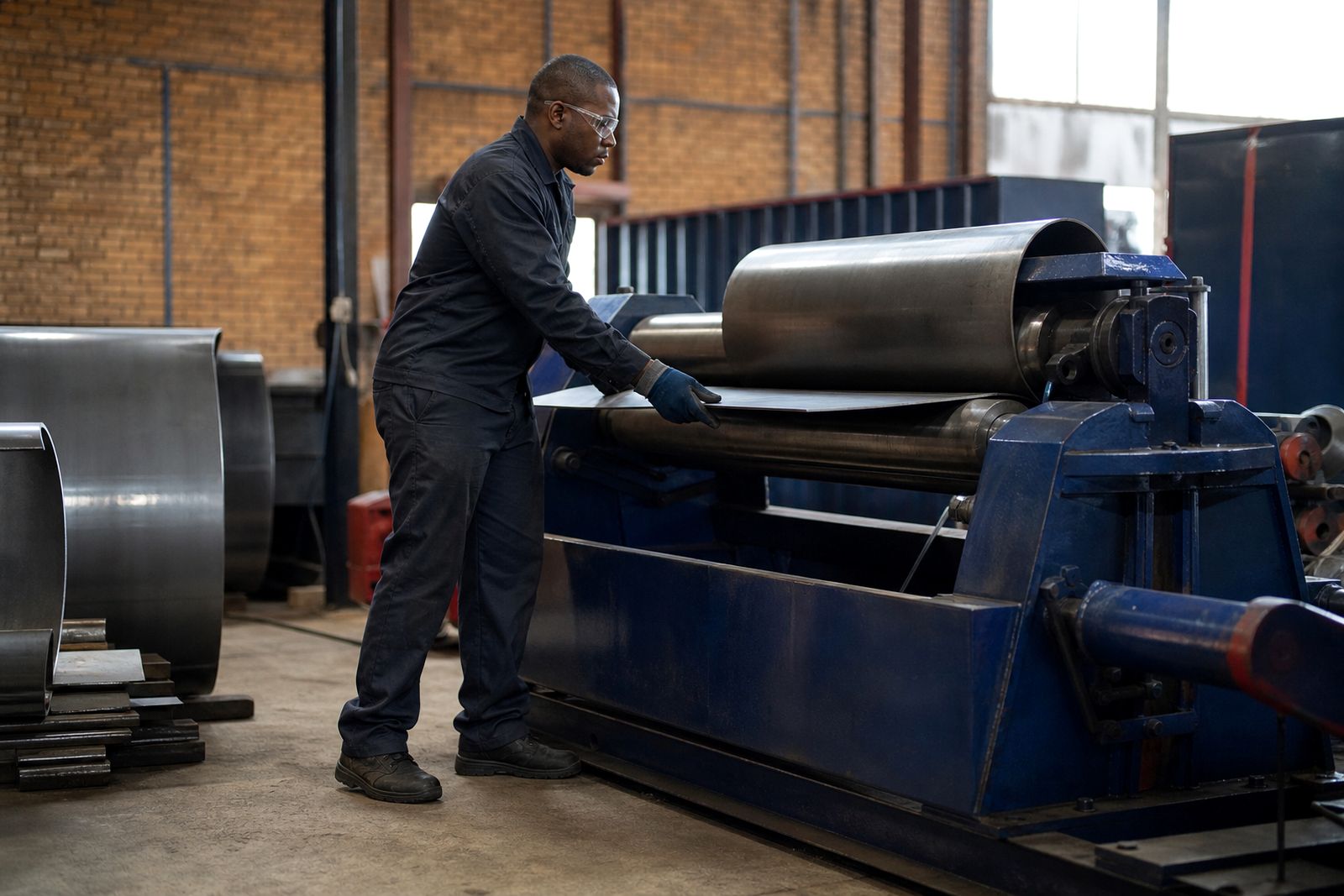
Tell us about the part you need rolled
Send a note through our contact form with your drawing or sketch, the material and thickness, the sizes and quantities, and how the steel will reach our Sunnyrock workshop, and we will come back with questions or a written quote.
Open the contact form