Sheet rolling
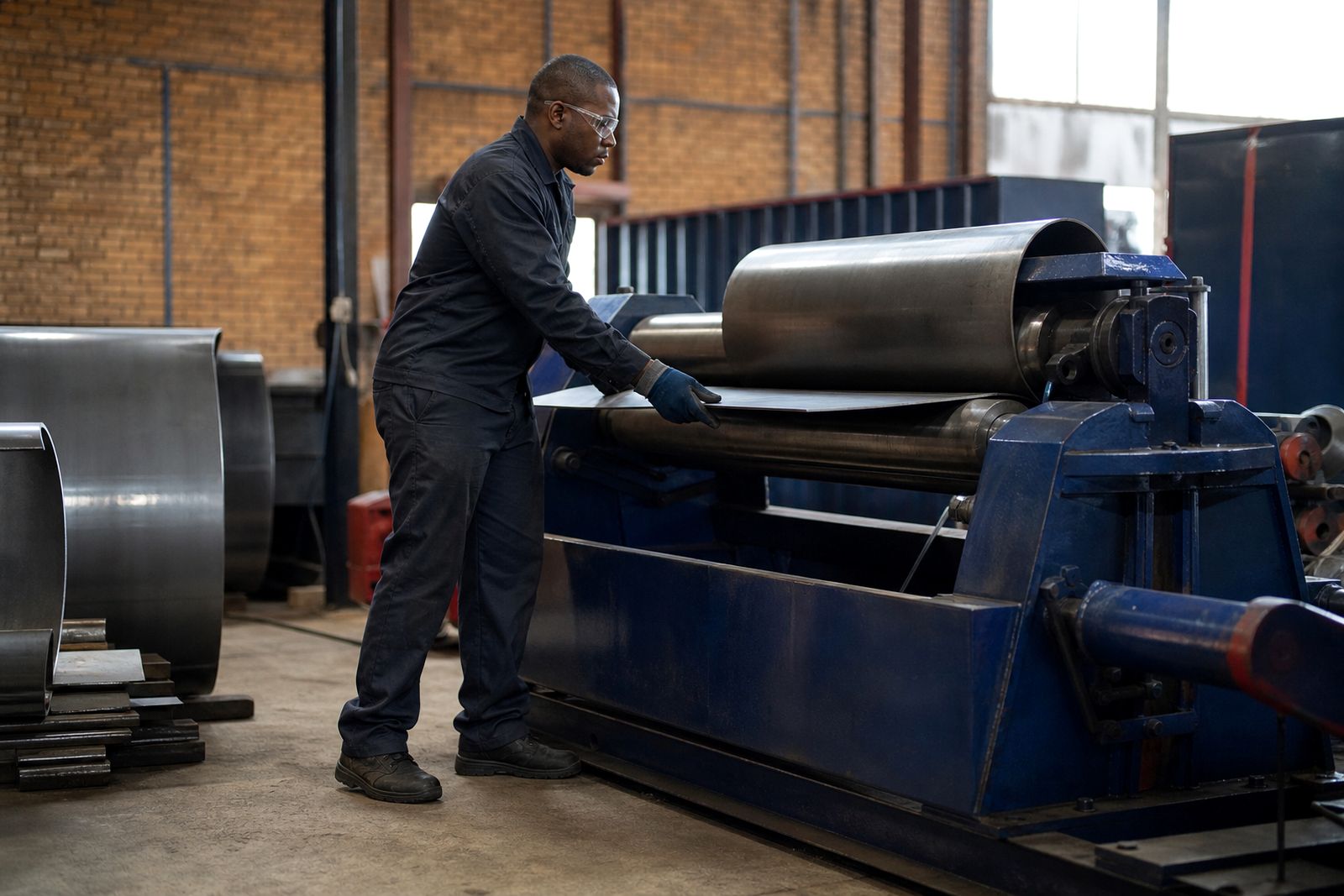
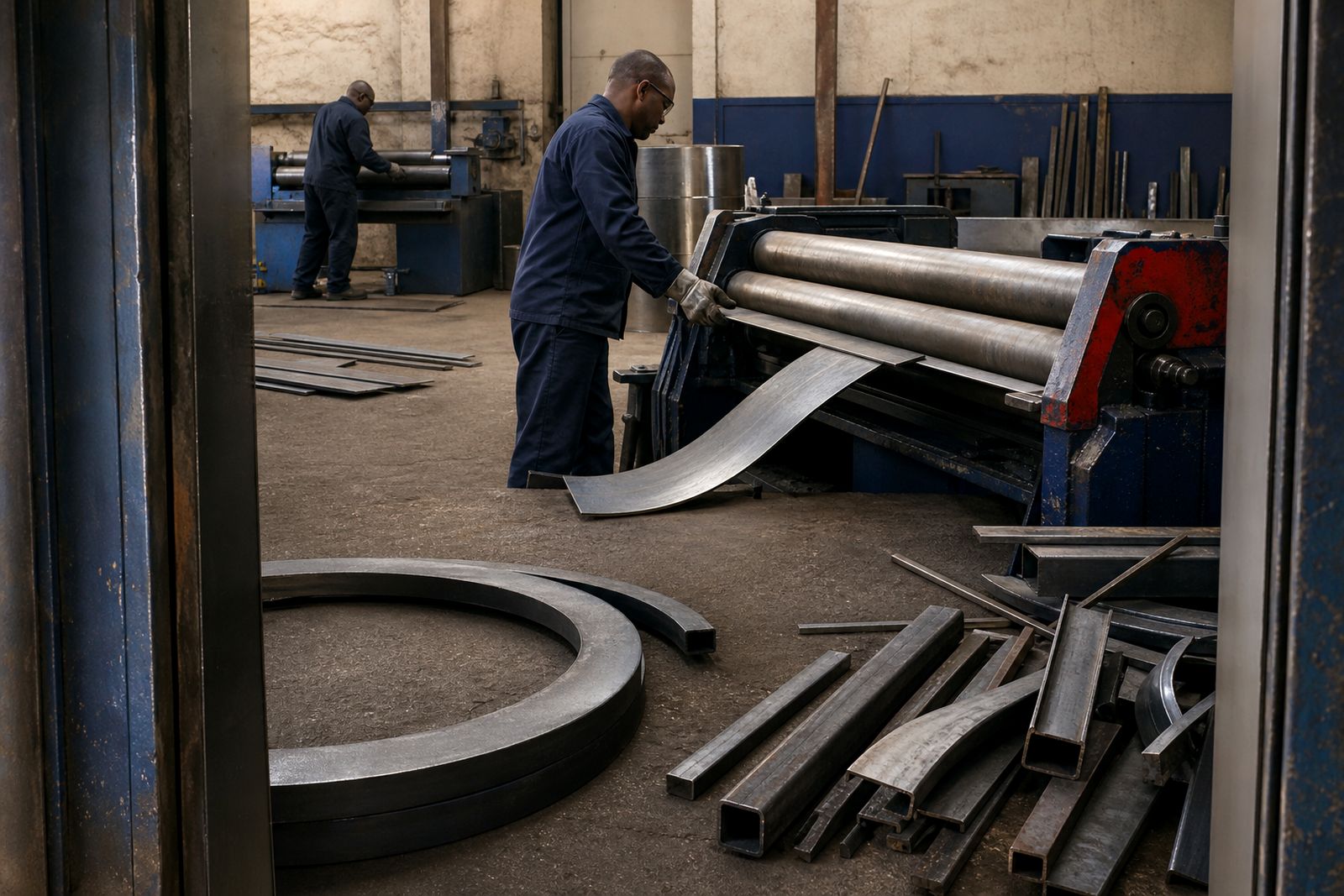
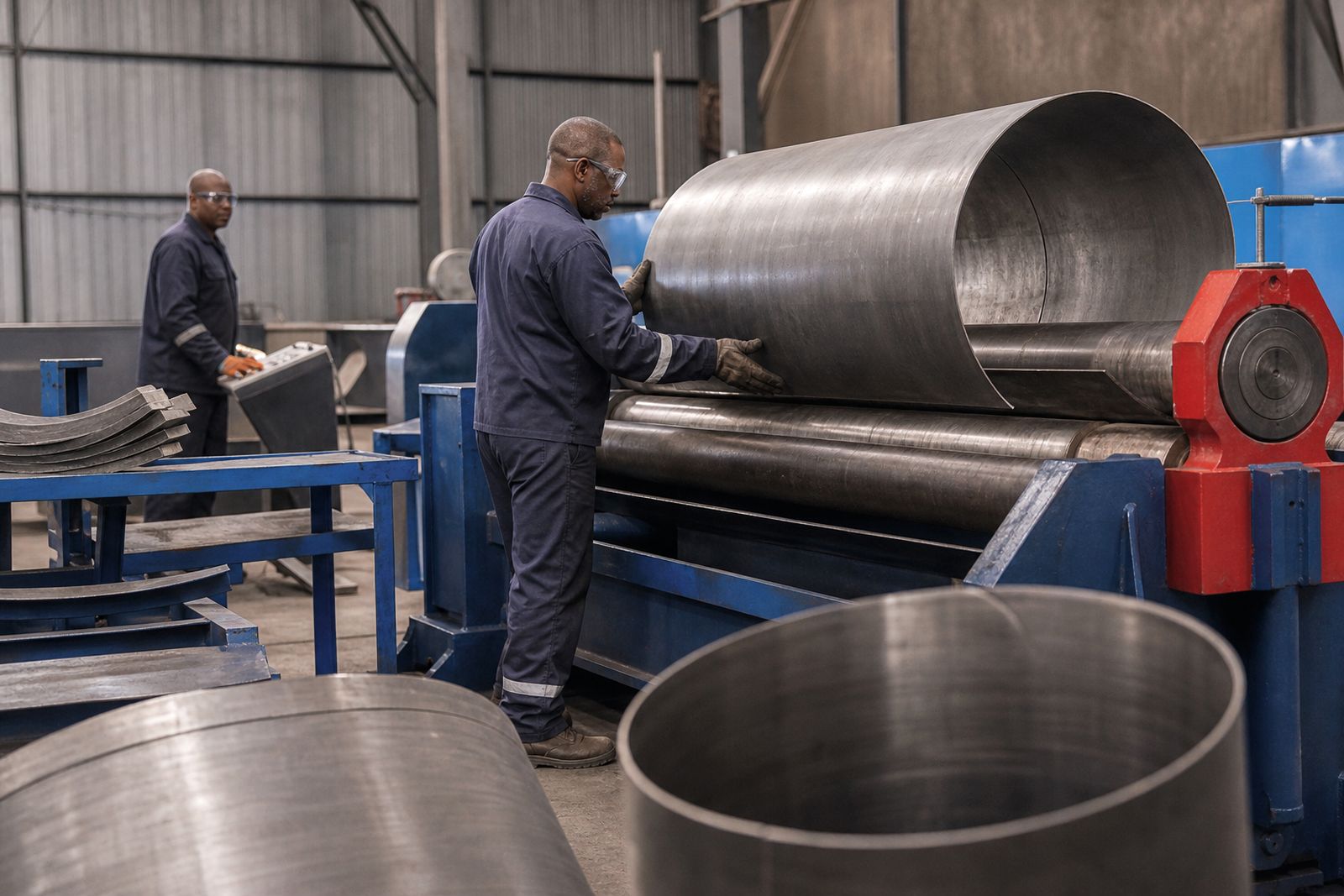
Brockett rolls thin sheet for fabrication and repair work, shaping mild steel, stainless steel and galvanised material into clean curves for trade use.
Sheet rolling for lighter steel work
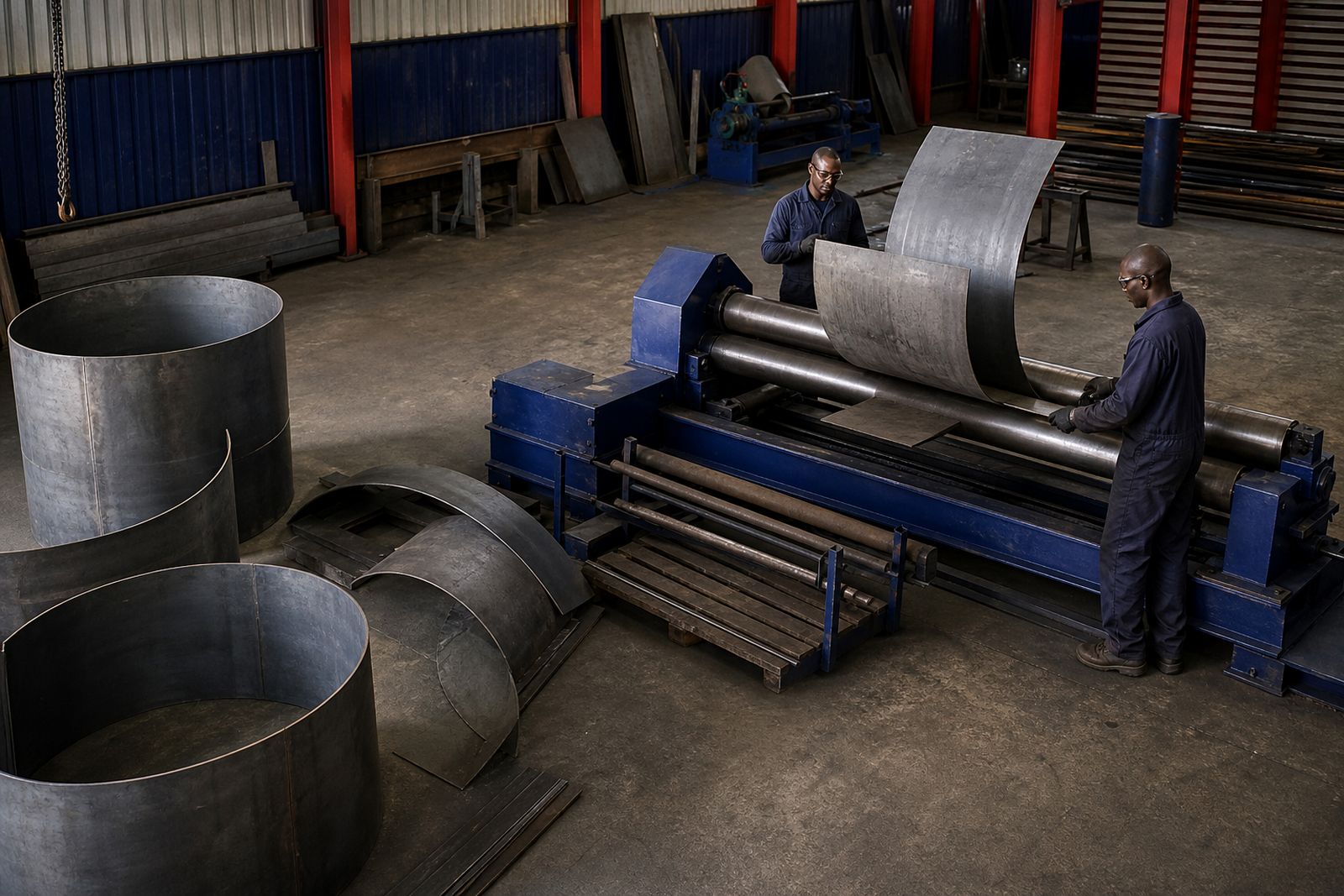
Brockett is a steel rolling workshop in Sunnyrock, Germiston, rolling sheet, plate and sections to size for builders, workshops, fabricators and manufacturers. Sheet rolling is used where thinner material needs a controlled curve for fabrication or repair work.
Typical sheet rolling work includes parts for ducting, covers, guards, sleeves, skins and cladding curves. The aim is to form the material cleanly so it is easier to assemble, fit into a fabrication, or replace a worn or damaged part in an existing unit.
Clean curves on thin material
Thin sheet behaves differently from heavier material. It can mark more easily, pick up surface pressure and show kinks if the rolling method is not suited to the job. For that reason, sheet rolling needs careful handling from the start, especially where the finished face will stay visible.
Brockett works from your drawing, template, sketch or sample and rolls the part to the required shape in its own workshop. For customers sending finished or coated material details, it helps to note the surface condition clearly through the contact form so the enquiry can be reviewed properly before quoting.
Used for ducts, covers and guards
Sheet rolling is often chosen for practical workshop items that need a smooth radius without folding or faceting. Common examples include curved duct sections, machine covers, protective guards, wraparound skins and light cladding components.
- Duct sections, where a regular curve helps with assembly and alignment.
- Covers and casings, where appearance and consistent shape both matter.
- Guards and shields, formed from lighter sheet for fabrication around equipment.
- Cladding curves, where the sheet must follow a line cleanly without obvious distortion.
If your work is in heavier material, see plate rolling. If you need rolled angle, flat bar, channel, tube or beams, see section rolling. For tapered shapes, see cone and segment rolling.
Materials and enquiry details
Brockett rolls thin mild steel sheet, stainless steel sheet and galvanised sheet for trade fabrication and repair work. When sending an enquiry, include the material type, thickness, required diameter or radius, width, quantity and whether the part is a full roll or an open section.
Good information at quoting stage reduces back and forth and makes it easier to assess the job. Drawings, templates and sketches are all useful. There is practical guidance on drawing a part for rolling, material and thickness and checking a rolled part.
How work is sent to the workshop
All rolling is done in Brockett’s own workshop at 2 Makro Place, Sunnyrock 1401, Germiston. Customers send enquiries through the contact form with drawings, templates or sketches and the material details. Brockett replies with any questions needed to clarify the work, or with a written quote.
Customers can drop material off and collect finished parts, or arrange their own transport or courier. If you are preparing work for rolling, the notes under sending work can help you package the job information clearly before you send it through.
What our Steel Rolling customers say
Verified Google reviews
Questions we get asked
Can Brockett roll thin galvanised sheet without damaging the finish?
Galvanised sheet can be rolled for trade fabrication work, but the condition of the surface and the job details should be provided with the enquiry. Send the material type, thickness and the required shape through the contact form, along with any drawing, sketch or template, so the work can be assessed properly.
What details should I send for a sheet rolling quote?
Send the material type, thickness, width, quantity and the required diameter or radius. It also helps to say whether the part is a full cylinder, a partial wrap or another curved form. Drawings, templates, sketches or a sample part can all be used to support the enquiry.
Do you roll stainless steel sheet for covers and guards?
Yes, Brockett rolls thin stainless steel sheet to size for fabrication and repair work, including covers, guards and similar curved components. The best way to start is to send the shape required, material details and any drawing or template through the contact form for review and written quoting.
Can I send a sample if I do not have a formal drawing?
Yes. Brockett works from drawings, templates or samples in its Sunnyrock workshop. If you do not have a formal drawing, a clear sketch with dimensions or a sample part can help show the curve and finished shape needed. Include as much material information as you can with the enquiry.
How do I get material to and from the workshop?
Customers drop material off and collect finished parts from Brockett’s workshop in Sunnyrock, Germiston, or they arrange their own transport or courier. Before sending material, submit the job details through the contact form so the workshop can review the work and respond with any questions or a written quote.
Also worth a look
Tell us about the part you need rolled
Send a note through our contact form with your drawing or sketch, the material and thickness, the sizes and quantities, and how the steel will reach our Sunnyrock workshop, and we will come back with questions or a written quote.
Open the contact form