Material, thickness and springback
Material details change how steel rolls and how the finished curve settles. Grade, thickness and width all affect springback, flat ends and what can be formed cleanly.
Why the exact material matters
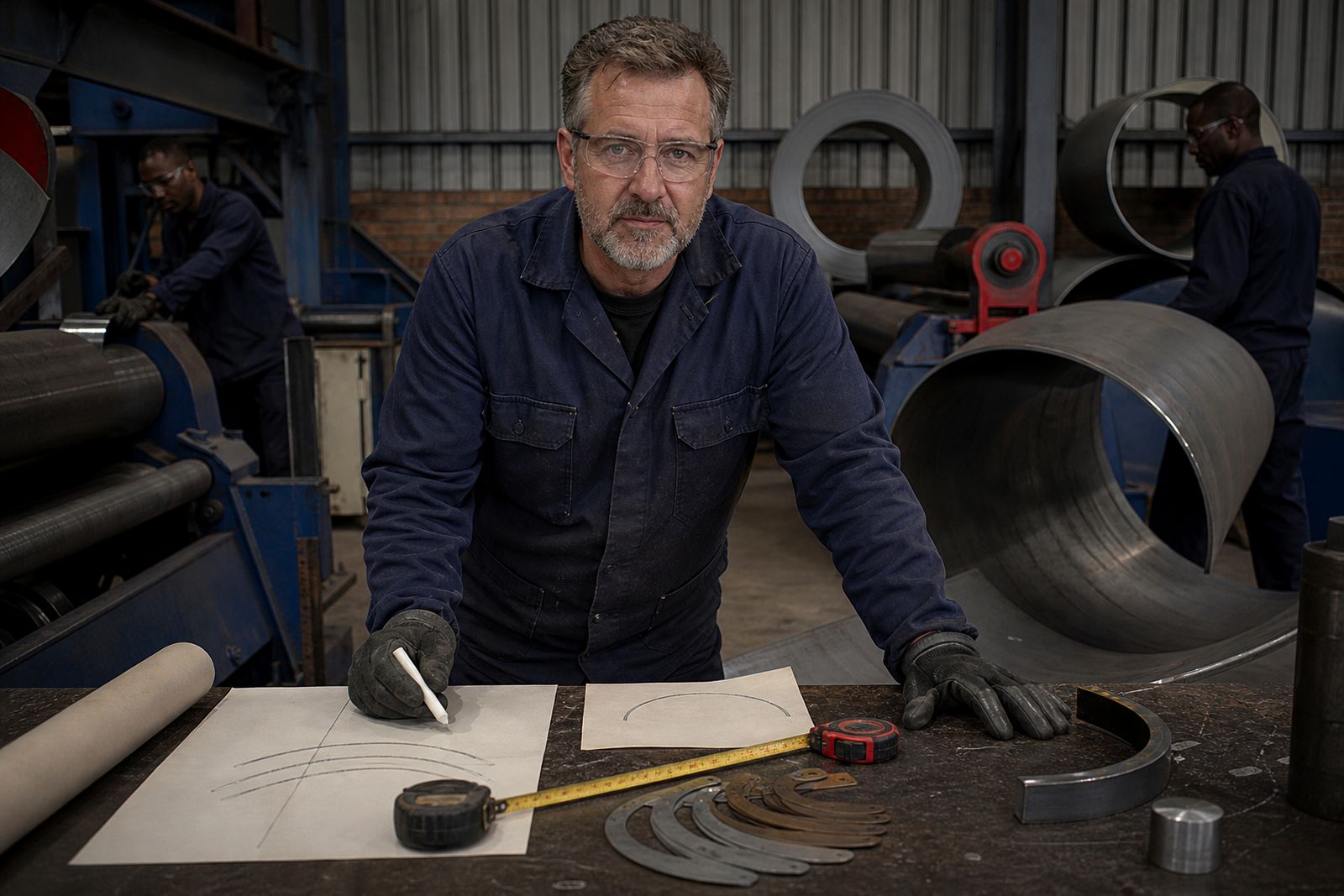
When a part is rolled, the workshop is not only shaping it to a radius or diameter. It is also working with the behaviour of the steel itself. Two pieces that look similar on the floor can roll differently if the grade, thickness or width changes. That is why Brockett asks for the exact material details with the enquiry.
Accurate material information helps the workshop judge how the steel is likely to move during rolling, how much springback to expect and what finish is practical at the ends. It also helps when the job is for tanks and vessels, ducting, structural curves or repairs, where the formed part still needs to suit the fabrication that follows.
How grade affects the curve
Material grade has a direct effect on how readily a piece takes a set in the rolls. Some steel will form more willingly, while other material will resist the bend more strongly and try to return closer to its original shape after rolling. That return is what fabricators call springback.
For the same target curve, a change in grade can mean a change in how the part must be rolled to reach the finished result. If the grade is not stated clearly at enquiry stage, the workshop may need further questions before quoting. Sending the material details through the contact form with the drawing, sketch or template helps avoid assumptions.
This matters across different kinds of work, whether the job is sheet rolling, plate rolling or section rolling. The shape may be simple, but the material still decides a lot about the way the curve settles.
Thickness and width change the job
Thickness affects stiffness. Thin sheet behaves differently from heavier plate, even when both are being rolled to a similar radius. As thickness increases, the steel generally needs more forming to hold the required curve, and the finished part may show springback differently from a lighter piece.
Width also matters. A narrow strip can behave differently from a wide plate of the same thickness and grade. Wider material can influence how evenly the curve develops across the face, especially where a part must suit mating pieces in fabrication or repair work.
- Thin sheet may form quickly but still needs allowance for springback.
- Heavier plate may resist the bend more and hold stress differently through the section.
- Wider pieces can present different forming conditions from narrow pieces of the same material.
- Section shapes such as angle, flat bar, channel, tube and beams each respond in their own way when curved.
Springback and flat ends in practice
Springback is the tendency of steel to open slightly after it comes out of the rolls. It is a normal part of rolling work, not a fault. The workshop allows for it while forming the part, but the amount depends on the material details supplied. A change in grade or thickness can change the result.
Flat ends are also part of practical rolling. At the ends of a rolled piece there can be a short area that does not carry the full curve in the same way as the middle. How noticeable that is depends on the material and the shape being formed. This is especially relevant for cylinders, shells and similar parts used in tank and ducting work.
Where a job includes cones or transitions, the forming behaviour can change again because the material is not taking the same curve across the whole piece. That is why material details are just as important for cone rolling as for straight cylindrical rolling.
What to send with your enquiry
For Brockett to assess rolling properly, send the material details together with the drawing, sketch, template or sample through the contact form. The workshop reviews what has been sent and replies with questions or a written quote. Clear information at the start usually means fewer assumptions later.
Useful material information includes the grade, thickness and width, and whether the job is sheet, plate or a section such as angle, flat bar, channel, tube or beam. If the part is for a repair and needs to match an existing curve, say so when sending the enquiry. For related guidance on preparing information, see Drawing a part for rolling, or if the job is already complete and being checked, see Checking a rolled part.
Tell us about the part you need rolled
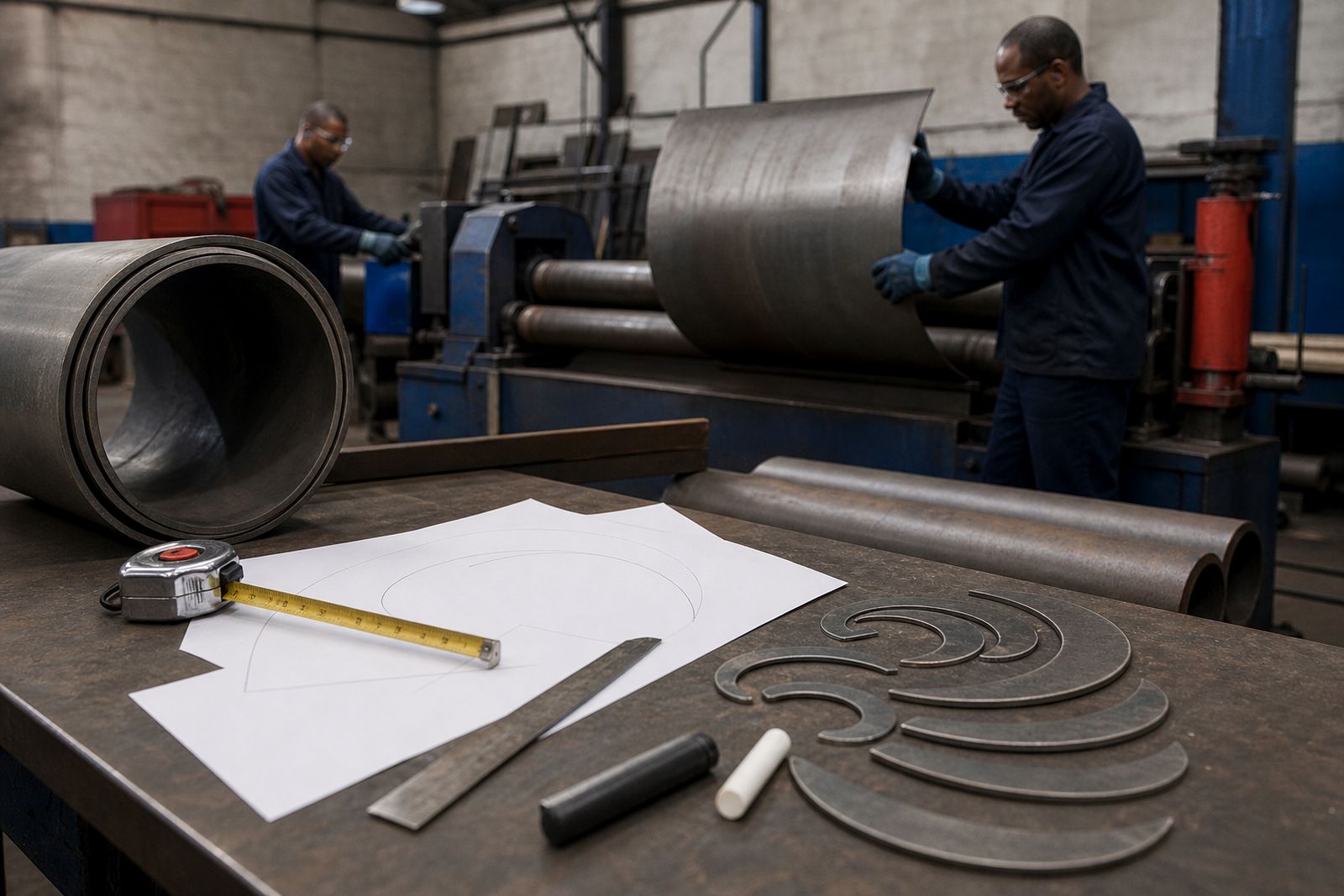
Send a note through our contact form with your drawing or sketch, the material and thickness, the sizes and quantities, and how the steel will reach our Sunnyrock workshop, and we will come back with questions or a written quote.
Open the contact form