Where rolled steel ends up
Rolled steel turns up in plenty of practical fabrication work. Brockett shapes sheet, plate and sections to suit tanks, ducts, structural curves, and replacement parts.
Built around everyday fabrication work
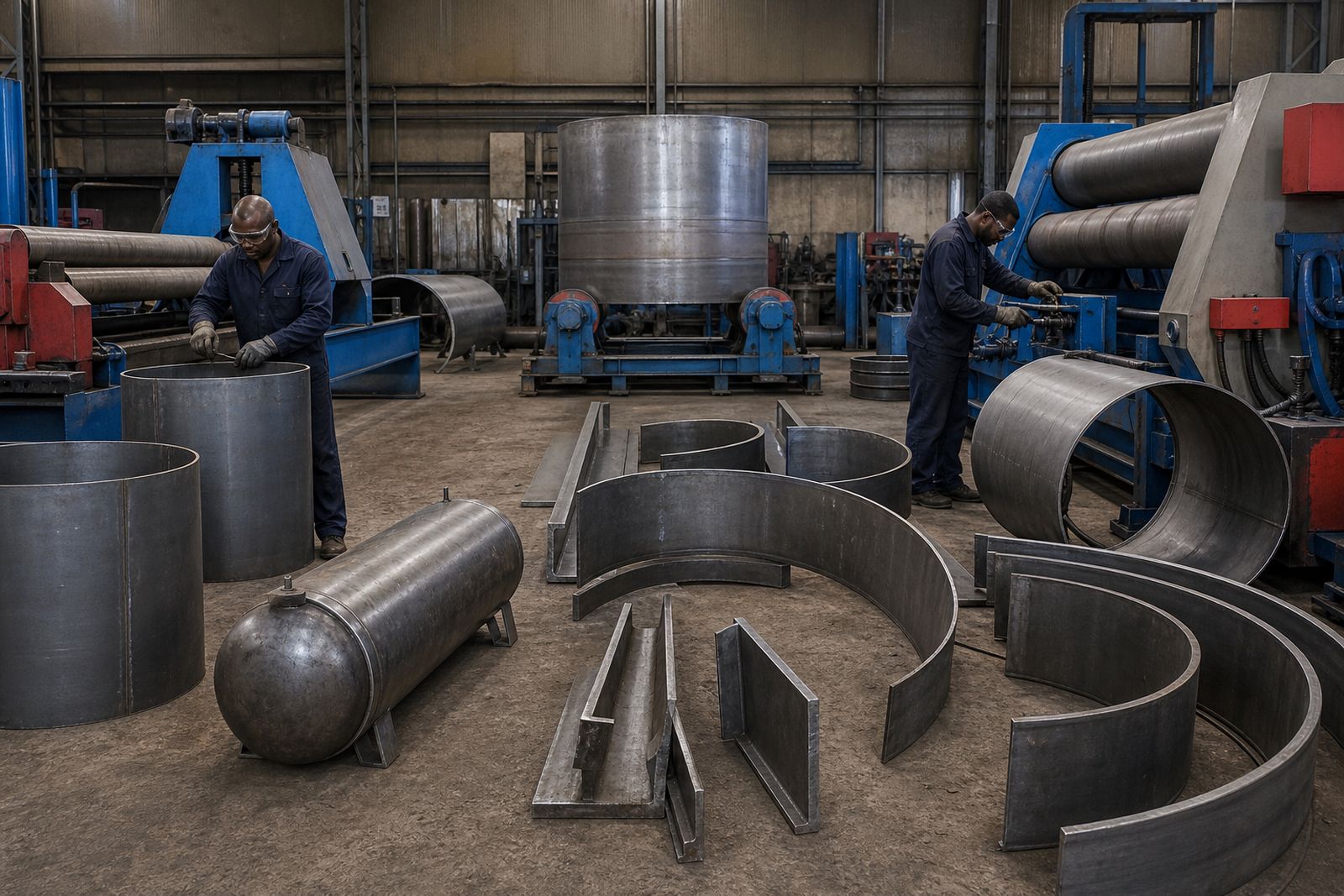
Rolled steel is rarely an end product on its own. It usually becomes part of something larger, such as a shell, a ring, a curved support, a duct section, or a formed replacement piece that needs to match an existing shape. Brockett works with builders, workshops, fabricators and manufacturers who need these parts prepared for fabrication and repair work.
The common thread is simple. Material arrives with a clear shape in mind, and the finished rolled part needs to suit the job that follows. Brockett rolls sheet, plate and sections to size in its workshop, forming steel parts from customer drawings, templates or samples.
Tanks, vessels and cylindrical work
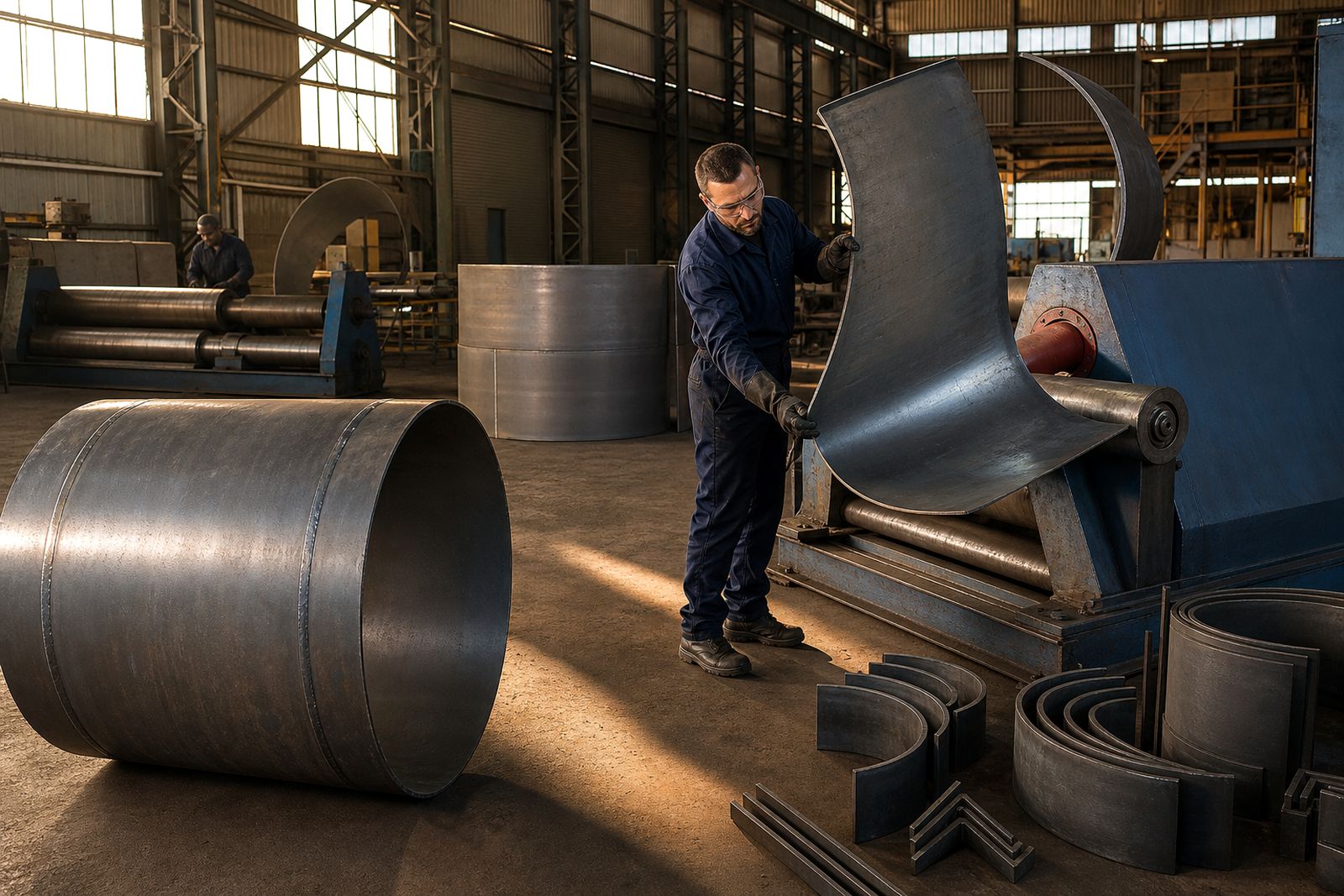
One of the most familiar applications for rolled plate and sheet is cylindrical work. Shell sections for tanks and vessels often begin as flat material that must be curved accurately before it can move into the next fabrication stage. Depending on the job, this may involve thinner sheet or heavier plate, rolled to a required diameter or radius.
Work of this kind often includes full shell pieces, partial wraps, collars and related curved components used in fabrication or repair. For more on this type of work, see Tanks and vessel shells and related plate rolling services.
Ducting, extraction and formed airflow parts
Rolled sheet is also widely used in ducting and extraction work. Straight cylinders, tapered sections and other formed parts are common where steel needs to guide or contain airflow, dust or fumes as part of workshop and industrial systems. The rolled shape is what gives these parts their function, so consistency matters.
Some jobs call for straightforward round sections, while others need formed pieces that tie into transitions or assemblies made elsewhere. Brockett handles the rolling and forming side in the workshop, based on the information sent through. Read more at ducting and extraction or see sheet rolling and cone rolling.
Structural curves and rolled sections
Not all rolling work is cylindrical. Curved structural parts are regularly needed for frames, supports, trims and fabricated assemblies where a straight section will not do the job. Brockett rolls sections including angle, flat bar, channel, tube and beams to suit these kinds of applications.
These curves may be used where a consistent radius is needed across matching pieces, or where a single formed section has to fit into a larger fabricated structure. Typical section work includes:
- Curved angle for frames and edge details
- Rolled flat bar for rings and support bands
- Channel and beam curves for formed structural elements
- Tube rolled for round or radiused fabricated parts
More detail is available at structural curves and section rolling.
Repair parts and matching existing shapes
Repair work often depends on getting a replacement part to follow the same curve as the original. That could mean a shell section, a rolled ring, a curved cover, or a section that needs to match an existing radius. In these cases, a template, sample or sketch can be just as useful as a formal drawing, provided the shape and material details are clear.
Brockett forms parts in its Sunnyrock, Germiston workshop from the information supplied through the contact form. Drawings, templates or sketches help define the job, and material can then be dropped off and collected, or moved by the customer's own transport or courier. For related guidance, see Repairs and replacement parts and Drawing a part for rolling.
Explore the range
Tanks and vessel shells
Rolled shell courses and cans for tanks and vessels, made to your drawings or templates in Brockett's Germiston workshop.
Read more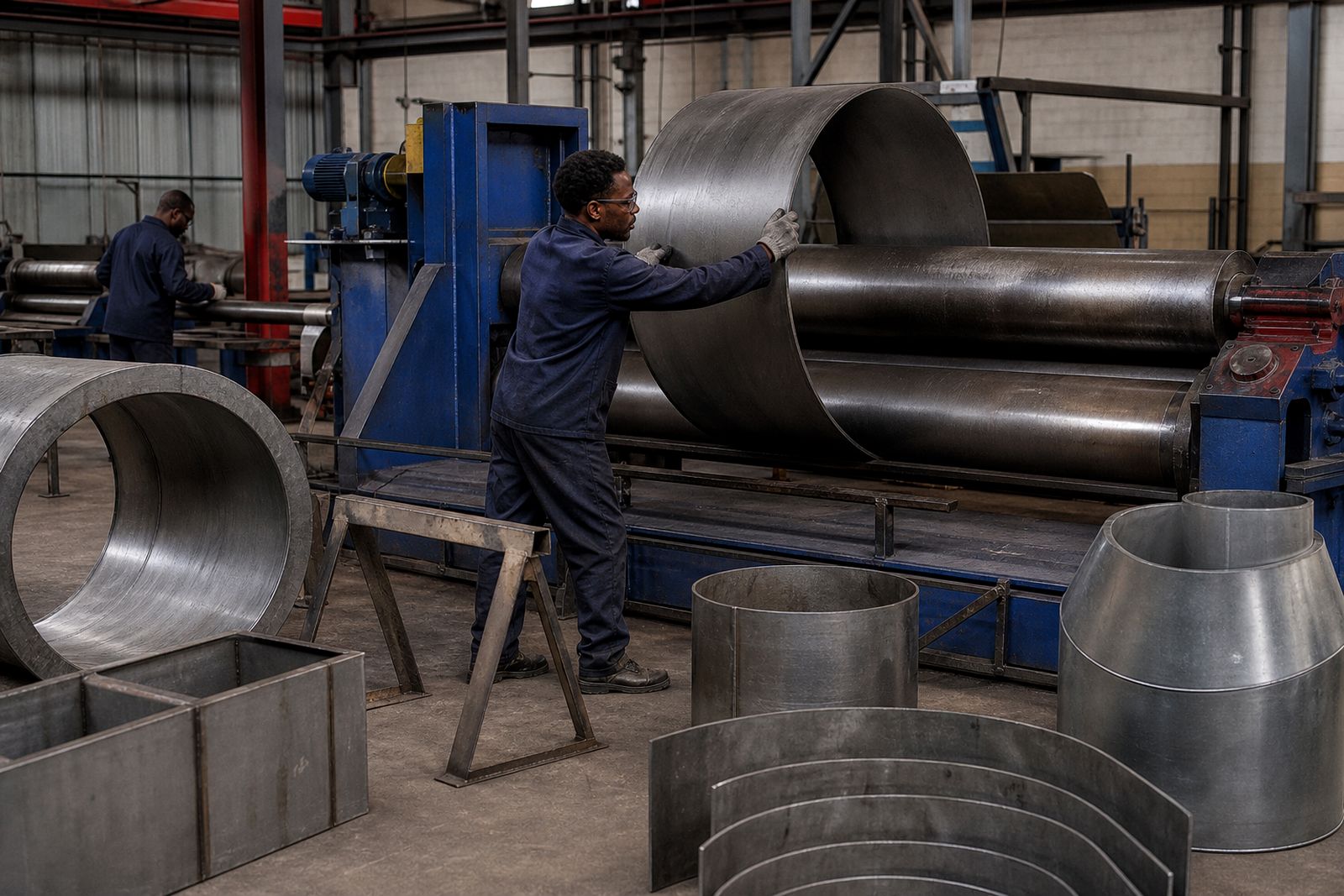
Ducting and extraction
Rolled steel parts for ducting and extraction fabricators, made to size from your drawings, templates or sketches.
Read more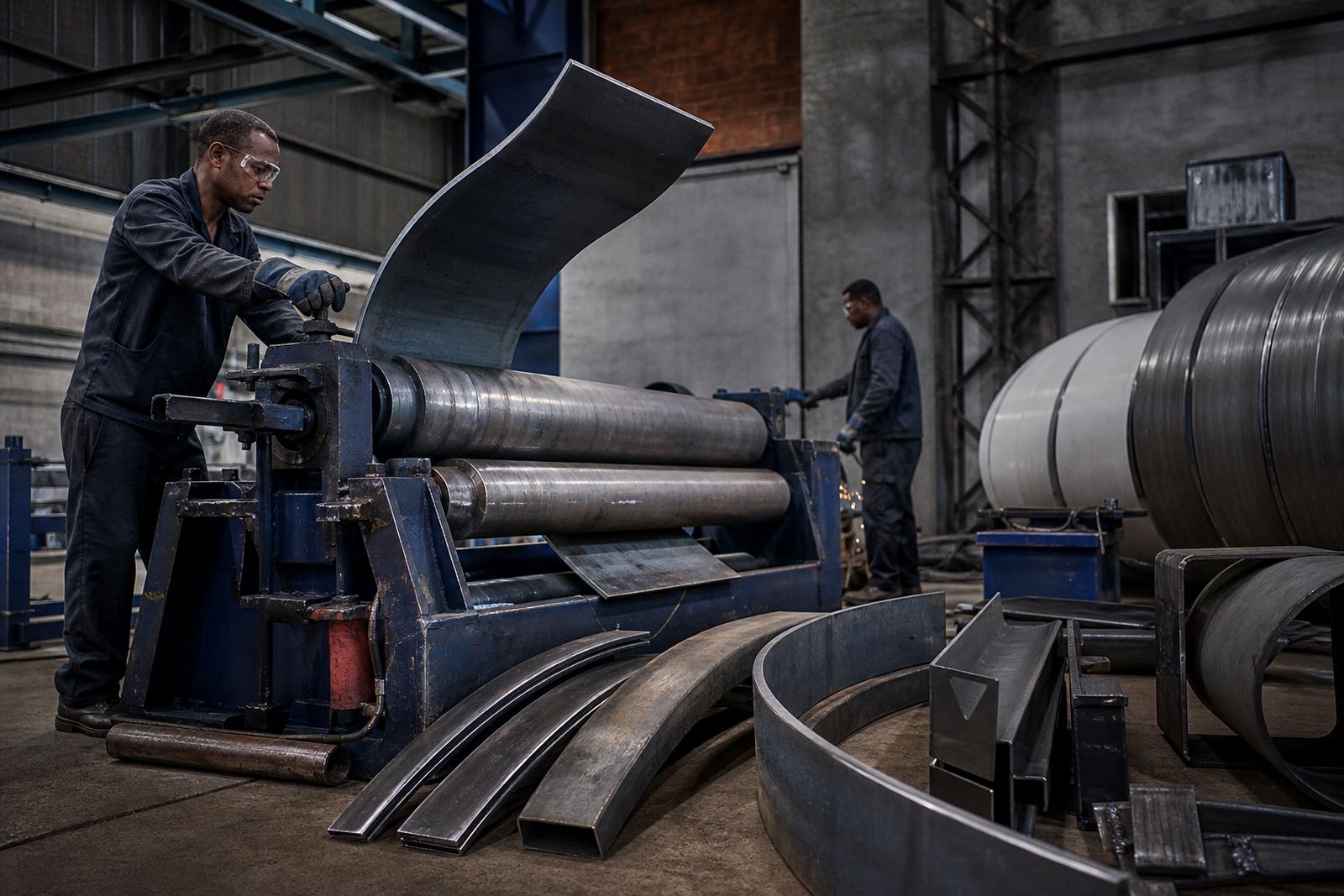
Structural curves
Rolled beams, channels, tube, angle and flat bar for structural curves in fabricated steelwork.
Read more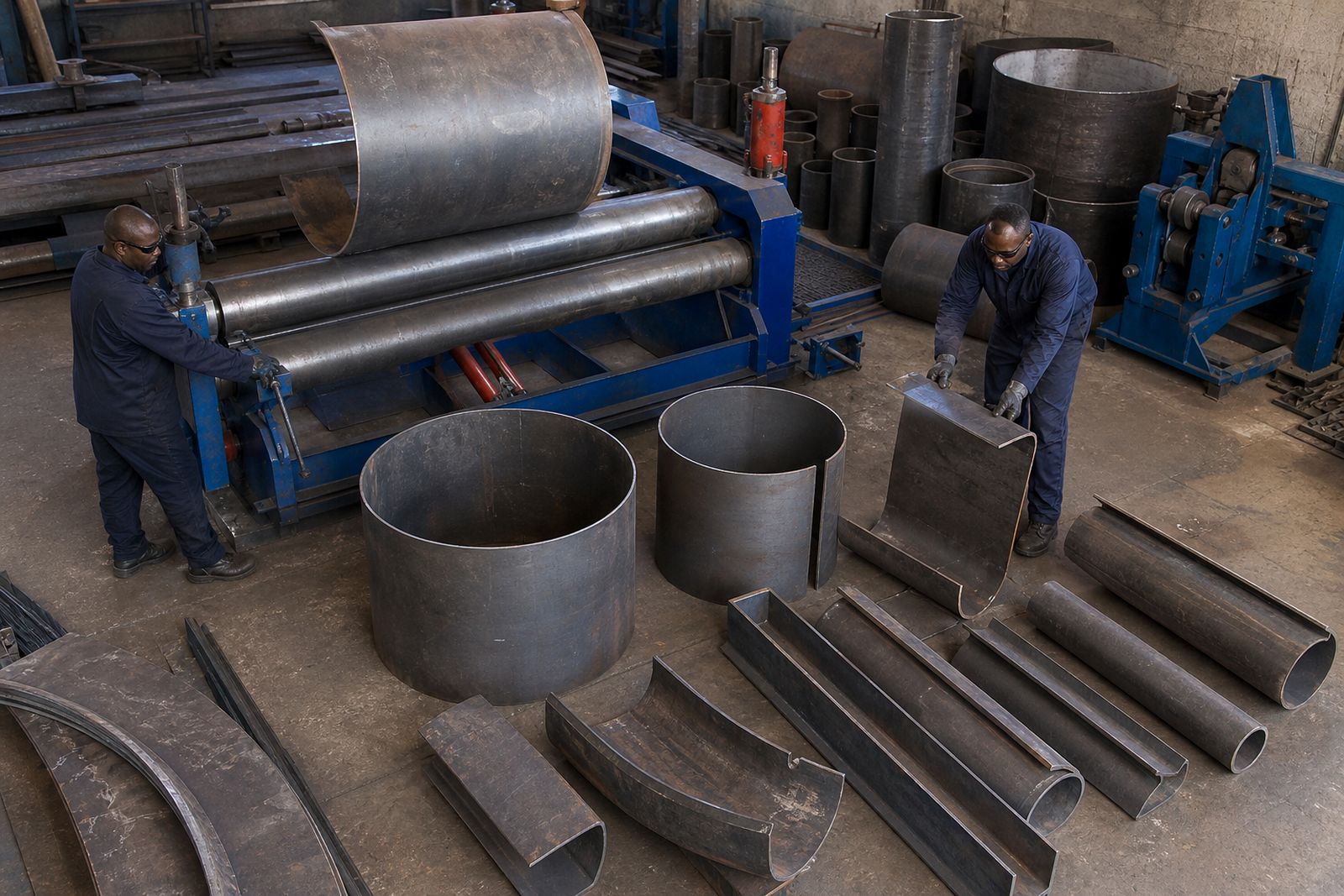
Repairs and replacement parts
Rolled steel parts for repair work, including replacement sections and re-formed components for workshop jobs.
Read moreTell us about the part you need rolled
Send a note through our contact form with your drawing or sketch, the material and thickness, the sizes and quantities, and how the steel will reach our Sunnyrock workshop, and we will come back with questions or a written quote.
Open the contact form